


 English
  中文简体
中文简体 
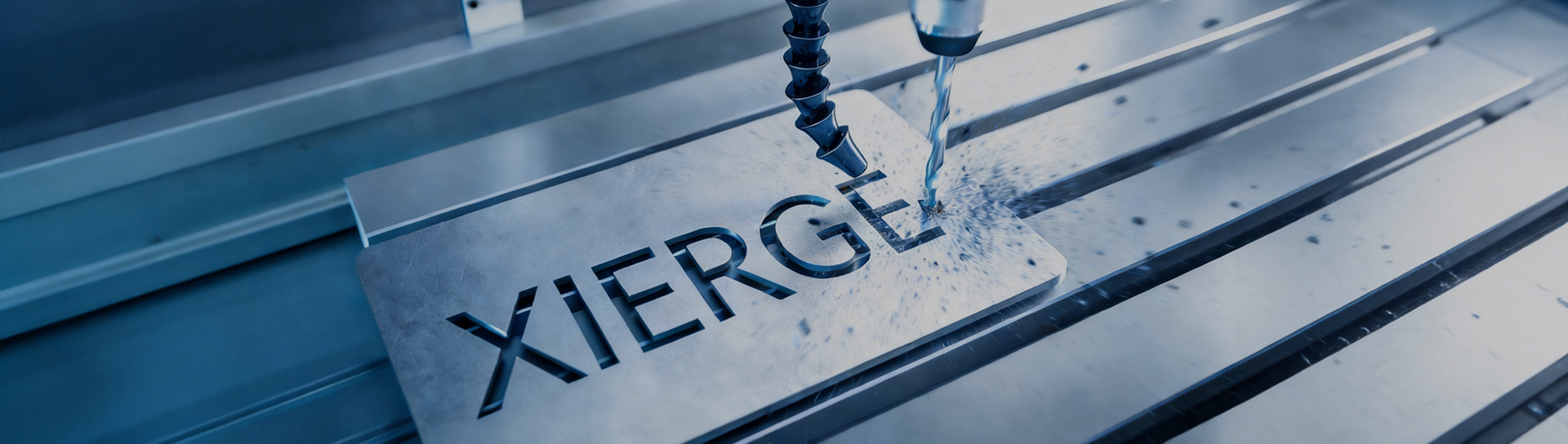
CNC Precision Machined Automotive Parts: Materials, Tolerances, and How to Choose the Right Manufacturer
Content
- 1 Why Automotive Applications Demand CNC Precision Machining
- 2 Materials Used in CNC Precision Machined Automotive Parts
- 3 Tolerance Standards for Automotive CNC Machined Parts
- 4 CNC Machining Processes Used in Automotive Part Production
- 5 Surface Finishes and Post-Processing for Automotive CNC Parts
- 6 Quality Standards: What Certifications Matter for Automotive CNC Suppliers
- 7 How to Evaluate and Choose the Right CNC Automotive Parts Manufacturer
- 8 Common Defects in Automotive CNC Machined Parts and How to Prevent Them
- 9 Supplier Evaluation Checklist Before Awarding a CNC Automotive Parts Contract
CNC precision machined automotive parts are components produced by computer-controlled subtractive manufacturing processes — turning, milling, drilling, grinding, and multi-axis machining — to dimensional tolerances that cast, forged, or stamped parts cannot reliably achieve. For automotive engineers and procurement teams, the decision to specify CNC machining over other manufacturing methods comes down to three factors: dimensional accuracy requirements, material properties, and production volume. This guide provides a direct, technical breakdown of all three, plus a practical framework for evaluating and selecting the right manufacturer — whether you are sourcing for prototype development, low-volume specialty parts, or high-volume series production.
Why Automotive Applications Demand CNC Precision Machining
The automotive industry operates under dimensional and performance requirements that are among the tightest in manufacturing. Engine components, transmission parts, brake system components, and steering system parts must function reliably across temperature ranges from −40°C to over 200°C, under continuous mechanical stress, and with service lives measured in hundreds of thousands of kilometers. A dimensional error of 0.02 mm in a valve seat or a bearing journal can cause premature wear, noise, vibration, or catastrophic failure.
CNC machining addresses this through:
- Repeatability — Modern CNC machining centers hold positional accuracy of ±0.005 mm or better across a production run of thousands of parts, something no manual process can match.
- Geometric complexity — 5-axis CNC machines produce complex internal geometries, undercuts, and compound angles in a single setup that would require multiple operations or special tooling by other methods.
- Material flexibility — CNC machining works across the full range of automotive materials: aluminum alloys, steel alloys, stainless steel, titanium, brass, copper, and engineering plastics.
- Surface finish control — CNC finishing operations achieve surface roughness values (Ra) from 3.2 µm for general machined surfaces down to 0.1 µm or better for precision bearing bores — values unreachable by casting or forging alone.
These characteristics make CNC machining the default manufacturing method for critical automotive components where dimensional accuracy, surface integrity, and material properties cannot be compromised.
Materials Used in CNC Precision Machined Automotive Parts
Material selection for CNC machined automotive parts is driven by the mechanical environment the part operates in — load type, temperature, corrosion exposure, weight targets, and cost. The following are the primary material families used in automotive CNC machining, with specific alloy grades and application examples.
Aluminum Alloys
Aluminum is the dominant material in automotive CNC machining due to its combination of low density (2.7 g/cm³ vs. 7.8 g/cm³ for steel), good machinability, and adequate strength for many structural and non-structural applications. Key grades used in automotive CNC parts include:
- 6061-T6 — General-purpose structural grade. Yield strength 276 MPa. Used for brackets, housings, manifolds, and suspension components.
- 7075-T6 — High-strength aerospace-grade aluminum. Yield strength 503 MPa. Used for performance suspension parts, uprights, and high-load structural components where weight is critical.
- 2024-T3 — High fatigue resistance. Used for rotating components and parts subject to cyclic loading.
- ADC12 / A380 — Die-cast aluminum alloys, often finish-machined by CNC after casting for dimensional critical features such as bearing bores and sealing faces.
Aluminum machines at cutting speeds 3–5× faster than steel, significantly reducing per-part cycle time and tooling cost. For high-volume automotive production, this speed advantage is a major economic driver of aluminum adoption.
Steel Alloys
Steel remains essential for automotive parts subject to high stress, wear, or impact. CNC machined steel parts include transmission shafts, gear blanks, brake components, fasteners, and engine internals. Common grades include:
- 1045 / 1144 medium carbon steel — General shafts, pins, and structural parts. Good balance of machinability and strength.
- 4140 / 4340 alloy steel — High-strength, heat-treatable grades for gears, crankshafts, connecting rods, and high-load fasteners. Tensile strength up to 1,080 MPa in the heat-treated condition.
- 8620 case-hardening steel — Used for gears and camshafts where a hard, wear-resistant surface is required over a tough core. Carburized and hardened after rough machining, then finish-ground.
- 52100 bearing steel — Standard material for rolling element bearing races. Machined to very tight tolerances (IT4–IT5 grade), then hardened and ground.
Stainless Steel
Stainless steel CNC parts are specified for automotive applications requiring corrosion resistance alongside mechanical performance. Common grades include 303 (free-machining, for complex turned parts), 304 (general corrosion resistance), and 316 (superior corrosion resistance for exhaust, fuel system, and sensor components). Stainless steel is significantly harder to machine than carbon steel — cutting speeds are typically 30–50% lower and tool life is shorter, which increases per-part cost.
Titanium Alloys
Titanium (primarily Ti-6Al-4V) is used in high-performance and motorsport automotive applications for parts where the weight-to-strength ratio is paramount — connecting rods, valves, spring retainers, and exhaust components. Titanium is notoriously difficult to machine: low thermal conductivity causes heat concentration at the cutting edge, and work hardening during machining accelerates tool wear. CNC titanium machining requires slow cutting speeds (typically 40–60 m/min), rigid setups, high-pressure coolant, and carbide tooling with appropriate coatings. Per-part cost is 4–8× the equivalent aluminum part.
Brass and Copper Alloys
Brass (typically C36000 free-machining brass) and copper alloys are used for electrical connectors, valve bodies, fittings, and sensor housings in automotive CNC machining. Brass machines exceptionally well — faster than aluminum in many cases — producing excellent surface finishes without burrs. Copper alloys are specified where electrical or thermal conductivity is the primary requirement.
Engineering Plastics
CNC machined plastic parts appear in automotive applications where weight, chemical resistance, or electrical insulation is required. Common materials include Delrin (POM) for gear-like mechanisms and clips, PEEK for high-temperature under-hood components, nylon (PA66) for bearing cages and housings, and PTFE for seals and wear pads. CNC machining is preferred over injection molding for plastic automotive parts in low volumes (under 500 units) where tooling cost cannot be justified.
| Material | Density (g/cm³) | Machinability | Relative Cost | Typical Automotive Use |
|---|---|---|---|---|
| Aluminum 6061-T6 | 2.70 | Excellent | Low | Housings, brackets, manifolds |
| Aluminum 7075-T6 | 2.81 | Good | Medium | Suspension uprights, high-load structures |
| Steel 4140 | 7.85 | Good | Low–Medium | Shafts, gears, high-load fasteners |
| Stainless 316 | 7.99 | Moderate | Medium–High | Exhaust, fuel system, sensors |
| Titanium Ti-6Al-4V | 4.43 | Difficult | Very High | Valves, con-rods, motorsport parts |
| Brass C36000 | 8.50 | Excellent | Medium | Valve bodies, connectors, fittings |
| PEEK | 1.32 | Good | High | High-temp under-hood components |
Tolerance Standards for Automotive CNC Machined Parts
Tolerances define the permissible variation in a dimension. In automotive CNC machining, tolerance specifications follow ISO 286 for linear dimensions (IT grades) and ISO 1101 for geometric tolerances (GD&T — flatness, cylindricity, perpendicularity, runout, etc.). Understanding which tolerance grades apply to your part is essential for specifying correctly — over-tolerancing increases cost unnecessarily, while under-tolerancing causes assembly problems and warranty failures.
ISO IT Grade Reference for Automotive CNC Parts
| IT Grade | Tolerance Band (µm) | Achievable By | Typical Automotive Application |
|---|---|---|---|
| IT4 | 9 µm | Precision grinding, honing | Bearing races, precision hydraulic bores |
| IT5 | 15 µm | Precision CNC boring, grinding | Crankshaft journals, camshaft bores |
| IT6 | 25 µm | CNC turning / milling (finish pass) | Gear bores, transmission shafts, valve guides |
| IT7 | 40 µm | Standard CNC machining | General housings, locating features, dowel bores |
| IT8 | 63 µm | Standard CNC machining | Non-critical dimensions, clearance fits |
| IT9–IT11 | 100–250 µm | Rough machining, casting | Non-functional surfaces, cosmetic features |
Beyond linear tolerances, automotive CNC parts frequently carry GD&T callouts that are often more critical than the dimensional tolerance itself. For example, a brake caliper bore might be specified at IT6 for diameter but with a cylindricity tolerance of 0.005 mm — meaning the bore must not only be the right size but must also be geometrically perfect along its length. These geometric tolerances require appropriate measuring equipment (CMM — coordinate measuring machine) to verify, not just a micrometer or caliper.
A key rule for engineers specifying CNC automotive parts: never tighten a tolerance beyond what the application actually requires. Moving from IT7 to IT6 on a non-functional bore can increase per-part machining cost by 20–40% with zero functional benefit. Review every tolerance callout against its functional purpose before releasing a drawing for quotation.
CNC Machining Processes Used in Automotive Part Production
Most automotive CNC parts require more than one machining process to reach finished dimensions and surface condition. Understanding which processes are used — and in what sequence — helps engineers write better specifications and helps procurement teams evaluate supplier capability accurately.
CNC Turning
Turning is used for rotationally symmetric parts — shafts, pins, bushings, valve bodies, fittings, and pistons. The workpiece rotates while a fixed cutting tool removes material. Modern CNC turning centers with live tooling can also perform milling, drilling, and threading operations in the same setup, eliminating secondary operations. Turning achieves surface roughness of Ra 0.8–3.2 µm in finish cuts, with dimensional accuracy of IT6–IT7.
CNC Milling
Milling is used for prismatic parts — housings, brackets, manifolds, plates, and complex structural components. 3-axis milling handles the majority of automotive components. 4-axis and 5-axis machining centers are required for parts with compound angles, undercuts, or features on multiple faces that would require multiple 3-axis setups. 5-axis machining is increasingly standard for complex aluminum automotive housings — it reduces setup time, improves geometric accuracy (fewer datum transfers), and enables complex surface contours in a single operation.
CNC Grinding
Grinding is used when the required surface finish or dimensional accuracy cannot be achieved by turning or milling alone, typically after heat treatment. Cylindrical grinding for shafts and bores, and surface grinding for flat mating surfaces, achieve Ra 0.1–0.4 µm and IT4–IT5 tolerances. Crankshaft journals, camshaft lobes, gear tooth flanks, and bearing seats are routinely ground after hardening to achieve the combination of hardness and geometric precision that the application demands.
Honing and Lapping
Honing is used to finish cylinder bores, hydraulic cylinder bores, and bearing bores after grinding. It produces the crosshatch pattern in engine cylinder bores that retains oil for lubrication during the running-in period. Honing achieves Ra 0.05–0.4 µm and IT4–IT5 cylindricity. Lapping achieves even finer finishes (Ra below 0.025 µm) for precision valve seating surfaces and fuel injection components.
Electrical Discharge Machining (EDM)
EDM is used for hardened steel parts where conventional cutting tools cannot operate — injection mold inserts, die components, and complex internal geometries in hardened tool steel. Wire EDM cuts complex 2D profiles in hardened material to ±0.002 mm accuracy. Sinker EDM creates precise cavities and blind features. EDM is slower and more expensive per unit volume removed than milling, but is irreplaceable for its specific applications.
Surface Finishes and Post-Processing for Automotive CNC Parts
The surface condition of a CNC machined automotive part affects wear resistance, corrosion resistance, fatigue life, friction characteristics, and appearance. Surface finish specification is therefore as important as dimensional tolerance for many automotive applications.
| Treatment | Base Material | Key Property Gained | Thickness / Depth | Typical Application |
|---|---|---|---|---|
| Hard anodizing (Type III) | Aluminum | Wear and corrosion resistance | 25–75 µm | Pistons, valve bodies, suspension parts |
| Zinc phosphate + oil | Steel | Corrosion resistance, paint adhesion | 5–15 µm | Brake components, structural steel parts |
| Black oxide | Steel | Mild corrosion resistance, appearance | 1–2 µm | Fasteners, pins, interior hardware |
| Electroless nickel plating | Steel / aluminum | Hardness (up to 70 HRC after heat treat), corrosion resistance | 10–50 µm | Fuel system components, hydraulic parts |
| Case carburizing + hardening | Low-carbon steel | Surface hardness (58–63 HRC) with tough core | 0.5–2.0 mm case depth | Gears, camshafts, spline shafts |
| Passivation | Stainless steel | Maximized corrosion resistance | Surface treatment only | Fuel, exhaust, medical-adjacent parts |
| PVD coating (TiN, TiAlN) | Steel / titanium | Extreme surface hardness (2,000–3,300 HV), low friction | 2–5 µm | Valve train components, motorsport parts |
One critical detail that is frequently overlooked in specifications: surface treatments add material to the part. Hard anodizing on aluminum adds 25–75 µm, half of which grows inward and half outward from the original surface. Electroless nickel adds uniformly to all surfaces. If a bore is machined to a tight tolerance before plating, the plating will reduce the bore diameter — sometimes enough to push it out of tolerance. Designers must account for coating thickness when specifying pre-treatment dimensions, or specify that critical dimensions are to be achieved post-treatment.
Quality Standards: What Certifications Matter for Automotive CNC Suppliers
Automotive supply chains operate under formal quality management system requirements that go beyond general manufacturing quality. When evaluating a CNC precision machined automotive parts supplier, certification status is a baseline filter — not a guarantee of quality, but an absence of certification is a disqualifying signal for most automotive OEM and Tier 1 supply chains.
IATF 16949:2016
IATF 16949 is the automotive-specific quality management system standard, developed by the International Automotive Task Force. It builds on ISO 9001 and adds automotive-specific requirements including production part approval process (PPAP), advanced product quality planning (APQP), measurement system analysis (MSA), and statistical process control (SPC). Any supplier providing CNC machined parts to automotive OEMs or Tier 1 suppliers is expected to hold IATF 16949 certification. Without it, the supplier cannot participate in most automotive supply chains regardless of their actual machining capability.
ISO 9001:2015
ISO 9001 is the baseline quality management system standard. It covers documented process control, corrective action systems, supplier qualification, and continuous improvement. For non-automotive-OEM applications (aftermarket parts, motorsport, specialty vehicles), ISO 9001 may be an acceptable alternative to IATF 16949. For direct OEM supply, it is not sufficient on its own.
AS9100 (Aerospace)
Some CNC machining suppliers serving both automotive and aerospace markets hold AS9100 certification. While this is an aerospace standard, it indicates a very high level of process discipline and documentation — often exceeding IATF 16949 requirements in some areas. A supplier with AS9100 certification and demonstrated automotive experience is a strong candidate for high-criticality automotive CNC parts.
PPAP and First Article Inspection (FAI)
Beyond certification, automotive buyers require PPAP (Production Part Approval Process) submission before a new part enters production. PPAP Level 3 — the most common automotive requirement — includes dimensional results from a minimum of 30 parts, material certifications, process flow diagrams, control plans, capability studies (Cpk ≥ 1.67 for critical characteristics), and a sample part for approval. First Article Inspection (FAI) reports document measurement of every drawing dimension on the first production part. These documents are mandatory, not optional, in automotive supply chains.
How to Evaluate and Choose the Right CNC Automotive Parts Manufacturer
The market for CNC precision machined automotive parts includes thousands of suppliers globally — from small job shops to large vertically integrated Tier 1 manufacturers. The following criteria provide a structured framework for narrowing the field to suppliers capable of meeting automotive-grade requirements.
Machine Capability Audit
Ask for a machine list. For automotive CNC parts, look for:
- 4-axis or 5-axis CNC machining centers for complex aluminum parts
- CNC turning centers with live tooling and sub-spindle capability
- In-process gauging — probing systems that measure the part on the machine between operations, catching errors before they compound
- Dedicated grinding and honing equipment if your parts require post-heat-treatment finishing
- CMM (coordinate measuring machine) capacity — at minimum one CMM per shift; temperature-controlled metrology room is the standard in serious automotive suppliers
Capacity and Lead Time Reliability
A supplier with excellent machine capability but insufficient capacity creates supply risk. Ask about current machine utilization rates — a shop running at over 90% utilization has very limited flexibility to absorb demand spikes or respond to urgent orders. For automotive series production, suppliers typically target 75–85% utilization to maintain responsiveness. Ask for on-time delivery data from existing customers — IATF 16949 certified suppliers are required to track and report this metric internally, so they should be able to provide it.
Material Traceability and Certification
For automotive CNC parts, every piece of raw material must be traceable to its mill certificate (material test report). The supplier must maintain a system that links each finished part back to the specific material heat number. This is non-negotiable for safety-critical parts (brakes, steering, suspension) and is increasingly required for all automotive parts. Ask the supplier to demonstrate their material receipt, inspection, and traceability process before awarding a contract.
Process Control and SPC Implementation
Statistical Process Control (SPC) is required by IATF 16949 for critical characteristics. In practice, this means the supplier measures critical dimensions at defined intervals during production, plots the data on control charts, and acts on out-of-control signals before defective parts are produced. Ask to see a sample SPC chart from an existing automotive part. A Cpk value of 1.33 is the typical automotive minimum for non-critical characteristics; 1.67 is required for characteristics designated as critical or special.
Engineering and DFM Support
The best automotive CNC suppliers do not just quote drawings — they review them for Design for Manufacturability (DFM) issues before quoting. A supplier who identifies a feature that is unnecessarily expensive to machine, suggests an equivalent geometry that cuts cycle time by 30%, or flags a tolerance that cannot be reliably achieved with standard equipment is a genuine engineering partner. This kind of input is particularly valuable during new program development, where design changes are still feasible without tooling cost implications.
Geographic Considerations and Supply Chain Risk
The automotive industry's experience with supply chain disruptions over the past five years has driven a significant reassessment of single-source and long-distance sourcing strategies. For CNC precision machined automotive parts, consider:
- Proximity to assembly plant — Just-in-time (JIT) delivery windows of 4–24 hours favor regional suppliers. A supplier 2,000 km away cannot reliably support sub-24-hour emergency deliveries.
- Dual sourcing — For safety-critical CNC parts, dual sourcing with two qualified suppliers is standard practice. The cost of qualifying a second supplier is far lower than the cost of a production line stoppage.
- Tooling ownership — Clarify who owns the cutting tools, fixtures, and gauges used to produce your parts. Supplier-owned tooling creates dependency; buyer-owned tooling enables source switching if necessary.
Common Defects in Automotive CNC Machined Parts and How to Prevent Them
| Defect | Root Cause | Prevention Measure |
|---|---|---|
| Dimensional drift during production run | Tool wear, thermal expansion of machine | In-process gauging, SPC, tool life management |
| Poor surface finish | Worn tooling, excessive feed rate, chatter | Rigid fixturing, correct cutting parameters, tool condition monitoring |
| Burrs on edges and holes | Tool geometry, exit angle, material ductility | Optimized tool path exit, controlled deburring operation |
| Geometric error (non-cylindrical bore) | Fixture clamping distortion, tool deflection | Fixture design review, bore gauging, final boring in unclamped state |
| Wrong material used | Material mix-up in stock area | XRF material verification at goods-in; color-coded material storage |
| Residual stress / distortion after machining | High cutting forces, insufficient stress relief before machining | Rough machine → stress relieve → finish machine sequence |
Supplier Evaluation Checklist Before Awarding a CNC Automotive Parts Contract
Use this checklist when conducting a supplier evaluation or audit for CNC precision machined automotive parts:
- IATF 16949 certification confirmed and certificate validity verified (not expired)
- Machine list reviewed — 4/5-axis capability confirmed for complex parts
- CMM and metrology room inspected — temperature controlled, calibrated equipment
- SPC implementation verified with sample charts and Cpk data
- PPAP experience confirmed — ask for a sample PPAP package from an existing automotive program
- Material traceability system demonstrated — from incoming material to finished part
- On-time delivery performance data reviewed — target ≥ 98.5% for automotive supply
- Capacity utilization rate assessed — target 75–85% for supply flexibility
- DFM review process confirmed — supplier proactively reviews drawings, not just quotes them
- Tooling ownership terms clarified in contract
- Sub-supplier management process reviewed — any heat treatment, plating, or grinding sub-suppliers should also hold relevant certifications
- Emergency response procedure confirmed — what is the supplier's process if a line-stop quality issue occurs?
CNC precision machined automotive parts sit at the intersection of material science, process engineering, metrology, and supply chain management. The right material — matched to the mechanical and thermal environment the part operates in — sets the foundation. The right tolerance specification — no tighter than the application requires, documented with GD&T — defines what the manufacturing process must deliver. The right machining process sequence — turning, milling, grinding, honing in the correct order — achieves the finished dimensions and surface condition. And the right manufacturer — IATF 16949 certified, SPC-capable, CMM-equipped, with demonstrated automotive PPAP experience — executes consistently across production volumes from first article to series supply.
Every one of these elements affects the final result. A brilliant design machined by an under-qualified supplier produces defective parts. A capable supplier working from an over-toleranced drawing produces parts that cost more than they need to. Getting all four elements right — material, tolerance, process, and supplier — is what separates automotive CNC programs that run smoothly from those that consume engineering and procurement resources firefighting quality problems throughout their production life.
-
How Do You Choose Precision CNC Machining Parts Based on Tolerances, Materials, and Supplier Capabilities?
A precision CNC machining part earns its name on the production floor, not in a brochure. The test is simple to state and hard to pass: does the part hold its specified dimension — often within ±0.01...
-
CNC Precision Machined Automotive Parts: Materials, Tolerances & Applications
Every confident start on a winter morning, every quiet stretch of highway, every smooth brake application depends on hundreds of small metal parts doing their jobs without complaint. That is the worl...
-
Steel Turned Parts: CNC Turning Materials, Tolerances and How to Source
Steel turned parts rarely get noticed. They sit inside a shock absorber, a liquid-cooling manifold, a power tool gearbox, or an optical instrument, quietly holding a shaft on centre, seating a valve,...
-
How Do High-Precision CNC Machined Liquid Cooling Parts Solve the Critical Thermal Challenges of Scaling AI Computing Power?
The rapid expansion of artificial intelligence workloads has placed unprecedented thermal demands on computing hardware, driving a corresponding evolution in the precision engineering required to man...
-
CNC Precision Machined Liquid Cooling Parts: Tolerances, Materials, Sealing
A water block can pass every dimensional report and still drip on the test bench, because its O-ring groove came off the machine a few hundredths of a millimeter oversize. Situations like this are wh...
-
Aluminum Swiss Screw Machined Parts: Precision, Tolerances, and Turnkey CNC Services
When a component must be small, precise, and produced in volume, aluminum Swiss screw machined parts are often the best answer. The Swiss-type lathe was developed for a challenge that ordinary turnin...

- Products
- CNC Precision Machined Automotive Parts
- CNC Precision Machined Liquid Cooling Parts
- CNC Precision Machined Power Tool Parts
- CNC Precision Machined Optical Components
- Customize
- Swiss Turning
- Machining Center
- CNC Milling&Turning
- Centerless Grinding Machine
- Cylindrical Grinding Machine
- Contact
-
-
TEL: +86-0574-62480516

-
E-mail: [email protected]

-
Phone: +86-13175199595

-
Address: Address: No. 6 Shiji 1st Road, Mazhu Doumen Development Zone, Yuyao City, Zhejiang Province, China

-

