


 English
  中文简体
中文简体 
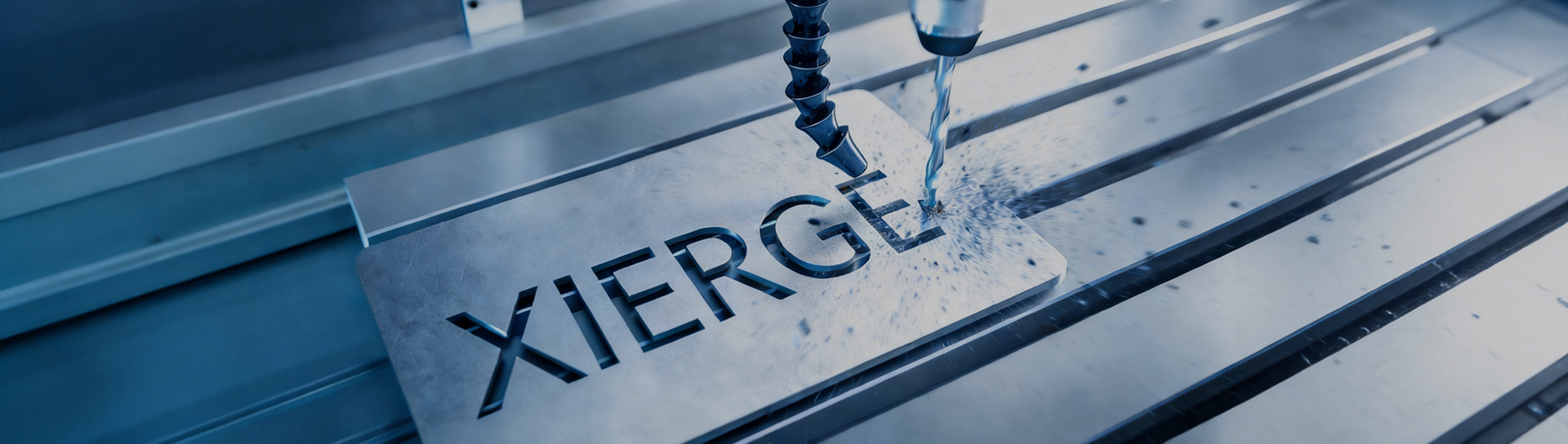
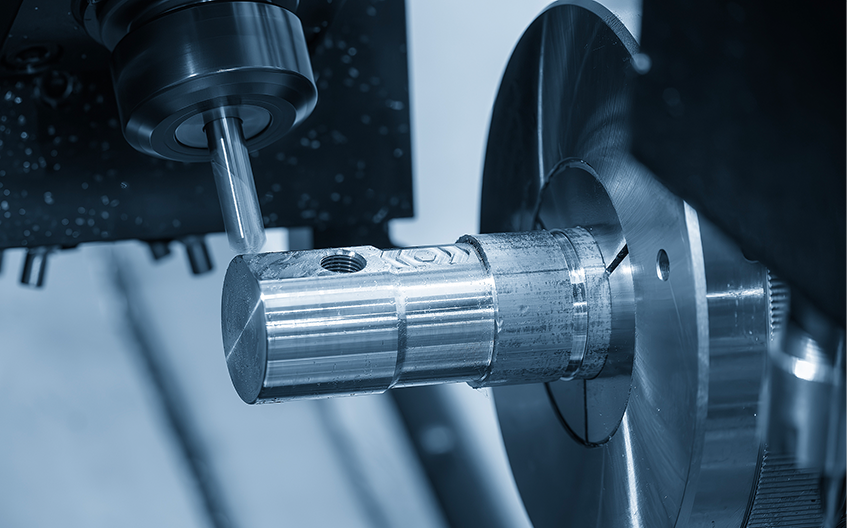
A CNC Mill-Turn center (also known as a turn-mill or multi-task turning center) can be understood as a machine that combines the core capabilities of a CNC lathe and a CNC machining center into a single platform.
Simply put, it is a "lathe" that can also "mill." It possesses both the ability of a lathe to rotate the workpiece for turning operations and the ability of a machining center to perform milling, drilling, tapping, and other operations using live tooling and a B-axis swiveling function.
Core Concept: 1+1 > 2
To machine a complex part (e.g., a shaft with a cross-hole) using conventional methods, you would typically need:
First, machine the outer diameter and inner hole on a lathe.
Then, move the part to a machining center, clamp it in a vise or custom fixture, indicate it in, and then machine the side hole and slot.
This entire process requires two separate setups, which introduces positioning errors and reduces efficiency.
The Mill-Turn center was developed specifically to solve this problem. By integrating turning and milling processes into one machine, it enables "one setup, complete machining."
-
01
"Absolute" Precision: Eliminates Accumulated Errors
This is its most fundamental value. The part is clamped only once from raw stock to finished product. This eliminates datum mismatches caused by multiple setups. Concentricity, perpendicularity, and positional accuracy all achieve the highest levels the machine is capable of. -
02
"Extreme" Efficiency: Dramatically Shortens Production Lead Times
Reduced auxiliary time: Eliminates the time spent transferring, re-clamping, and indicating parts between machines. High-speed simultaneous machining: Modern Mill-Turn centers are often equipped with dual spindles (main and sub-spindle) and dual turrets. While the main spindle machines the front side, the sub-spindle can simultaneously machine the back side; alternatively, two turrets can cut different features of the same part at the same time. Total machining time can be reduced by 50% or even more.
-
03
"Next-Level" Machining Capability: Handles the Most Complex Geometries
Mill-Turn centers typically feature a B-axis (swiveling live tool head), which allows tools to approach the workpiece from any angle. Whether it's complex curved surfaces, eccentric circles, polygons, deep holes, or side keyways and threaded holes – everything can be completed in one go. Typical parts include:
Shaft-type parts: Medical bone screws, aircraft engine blades, fuel injector nozzles, complex camshafts.
Disc/hub-type parts: Hydraulic valve bodies, turbine disks, impellers, complex connectors.

- Products
- CNC Precision Machined Automotive Parts
- CNC Precision Machined Liquid Cooling Parts
- CNC Precision Machined Power Tool Parts
- CNC Precision Machined Optical Components
- Customize
- Swiss Turning
- Machining Center
- CNC Milling&Turning
- Centerless Grinding Machine
- Cylindrical Grinding Machine
- Contact
-
-
TEL: +86-0574-62480516

-
E-mail: [email protected]

-
Phone: +86-13175199595

-
Address: Address: No. 6 Shiji 1st Road, Mazhu Doumen Development Zone, Yuyao City, Zhejiang Province, China

-

