


 English
  中文简体
中文简体 
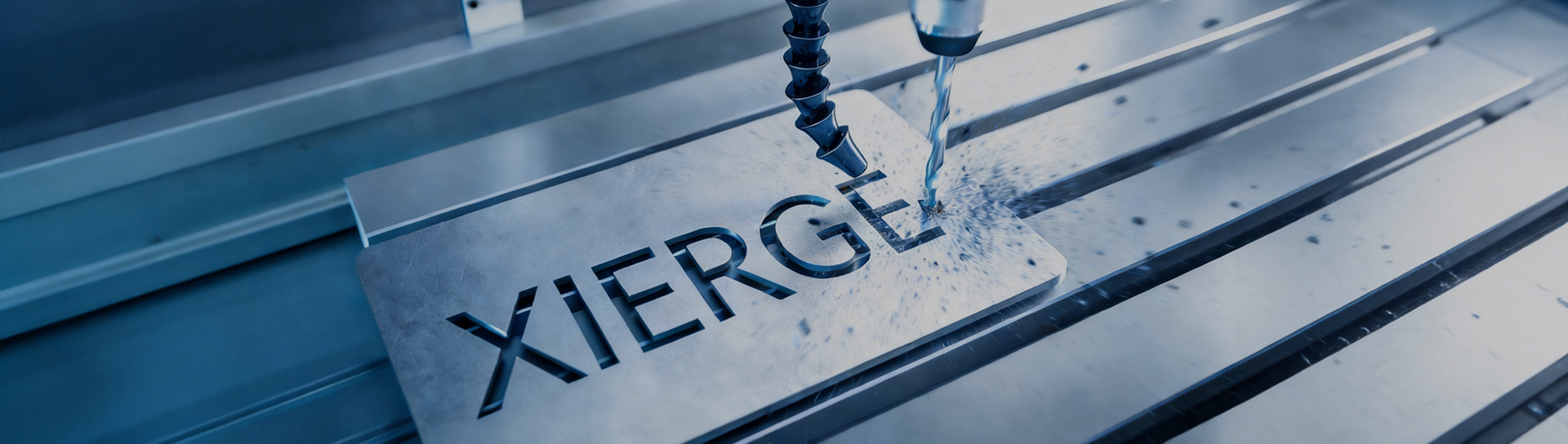
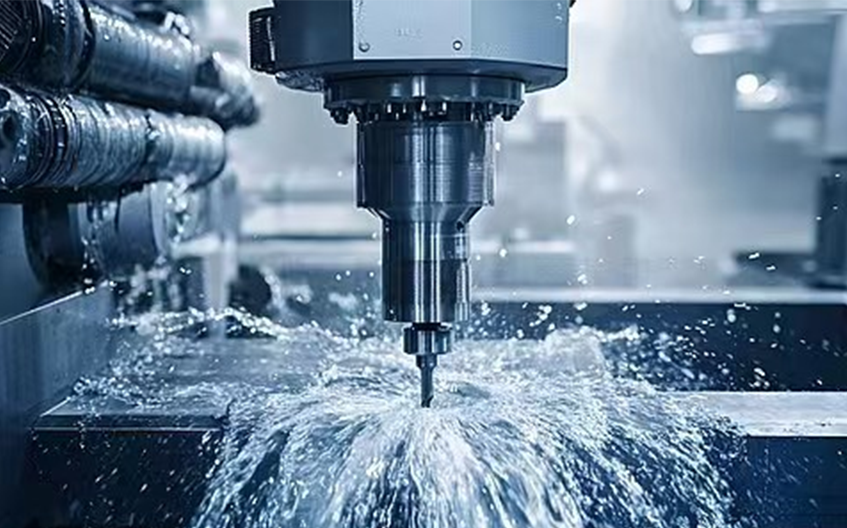
A CNC machining center can be thought of as a highly precise, highly automated "universal manufacturing machine." Essentially, it is a computer-controlled machine tool that starts with a raw block of metal or plastic and, through the automatic changing of different cutting tools — milling, drilling, boring, and tapping — ultimately "sculpts" it into a complex, precision part.
If a Swiss-type lathe is a "specialist for making slender, small shaft parts," then a machining center is a "generalist capable of making parts of various complex shapes" such as housings, molds, and plate-type components.
In simple terms, a CNC machining center is basically a CNC milling machine equipped with an automatic tool changer (ATC). This tool changer is the key feature that distinguishes it from ordinary milling machines.
Basic Workflow:
A block of metal (or plastic) is fixed onto the worktable.
According to programmed instructions, the spindle automatically picks up the first tool (e.g., a face mill) from the ATC and performs machining.
After the first operation is completed, the spindle automatically returns to the ATC, exchanges the first tool, picks up the second tool (e.g., a drill), and performs drilling.
This process repeats until all operations are finished.
Based on spindle orientation, machining centers are mainly classified into three types:
Vertical Machining Center (VMC): The spindle is perpendicular to the worktable. This is the most common type, ideal for processing discs, plates, molds, and parts with simple geometries.
Horizontal Machining Center (HMC): The spindle is parallel to the worktable. Offers better rigidity and chip evacuation, making it suitable for complex box-type parts like engine blocks and gearbox housings.
Gantry Machining Center: A large machine where the bridge (gantry) spans across the worktable like a gate. Used for machining very large workpieces, such as aircraft components or large automotive dies.
-
01
Process Concentration: One Setup Completes All Operations
This is the most significant advantage of a machining center. With a raw block fixed in place, the automatic tool changer allows it to automatically perform multiple operations — milling, drilling, tapping, boring, etc. This eliminates the errors caused by transferring parts between different machines and re-clamping, resulting in extremely high accuracy and efficiency. -
02
Superior Machining Precision and Consistency
As a CNC machine, all movements of a machining center are precisely controlled by high-precision ball screws and servo motors. Positioning accuracy and repeatability are typically at the micron level (0.001–0.005 mm). Automated programming ensures that every part in a production batch is virtually identical — product consistency is outstanding. -
03
Powerful Complex Surface Machining Capability
This is the unique strength that sets machining centers apart from conventional machines. Beyond the basic 3-axis machining center, there are more advanced 4-axis and 5-axis machining centers. By adding rotational axes, they can machine complex 3D surfaces — such as impellers, propellers, and mold cavities — in a single setup. This is simply impossible with traditional machine tools. -
04
High Automation and Flexibility
Equipped with an Automatic Tool Changer (ATC) and a sufficient tool magazine capacity, a machining center can operate unattended for long periods. It is also highly flexible: by simply changing the machining program and fixtures, the same machining center can switch from producing "automotive parts" to "medical devices." This makes it ideal for high-mix, low-volume production.
Typical Parts:
Molds: Plastic injection molds, die-casting molds, etc. This is a core application for machining centers.
Housings/Box-type Parts: Engine blocks, transmission cases, pump housings, etc. Horizontal machining centers are the preferred choice here.
Plate-type / Disc-type Parts: Flanges, valve covers, robotic arm connectors, etc. Vertical machining centers excel at these.
Complex Structural Parts: Aerospace structural components, impellers, smartphone housings (often requiring multi-axis simultaneous machining).
Batch Requirements: Highly flexible. Machining centers are suitable for both low-volume, high-mix production of high-value parts and, when integrated with automated loading/unloading systems, high-volume mass production.
Key Selection Criteria:
Machining Size: This is the primary specification. You need to choose a machine with a table size and X/Y/Z axis travels that accommodate the overall dimensions (length, width, height) of your parts.
Spindle Speed and Power: Choose high power for heavy roughing; choose high spindle speed for finishing or machining soft materials like aluminum alloys.
Tool Magazine Capacity: The more complex the process, the more types of tools are needed, and the larger the tool magazine capacity required. Common capacities include 16, 24, or 32 tools.
Number of Simultaneous Axes: For simple 2.5D parts, a 3-axis machine is sufficient. For complex curved surfaces requiring multi-face machining in one setup, a 4-axis or 5-axis machine is needed.
CNC Control System: Common systems include FANUC, Siemens, Mitsubishi, Heidenhain, etc. System stability directly impacts the user experience.
Market and Value:
CNC machining centers are the "mother machines" of modern manufacturing and a crucial indicator of a nation's industrial capability. Today's market includes leading international brands like DMG MORI and Mazak, as well as highly mature Chinese brands such as Haitian, Guosheng, and Neway. Chinese brands have become very capable for standard machining applications and offer advantages like high cost-performance ratios and fast local service response.

- Products
- CNC Precision Machined Automotive Parts
- CNC Precision Machined Liquid Cooling Parts
- CNC Precision Machined Power Tool Parts
- CNC Precision Machined Optical Components
- Customize
- Swiss Turning
- Machining Center
- CNC Milling&Turning
- Centerless Grinding Machine
- Cylindrical Grinding Machine
- Contact
-
-
TEL: +86-0574-62480516

-
E-mail: [email protected]

-
Phone: +86-13175199595

-
Address: Address: No. 6 Shiji 1st Road, Mazhu Doumen Development Zone, Yuyao City, Zhejiang Province, China

-

