


 English
  中文简体
中文简体 
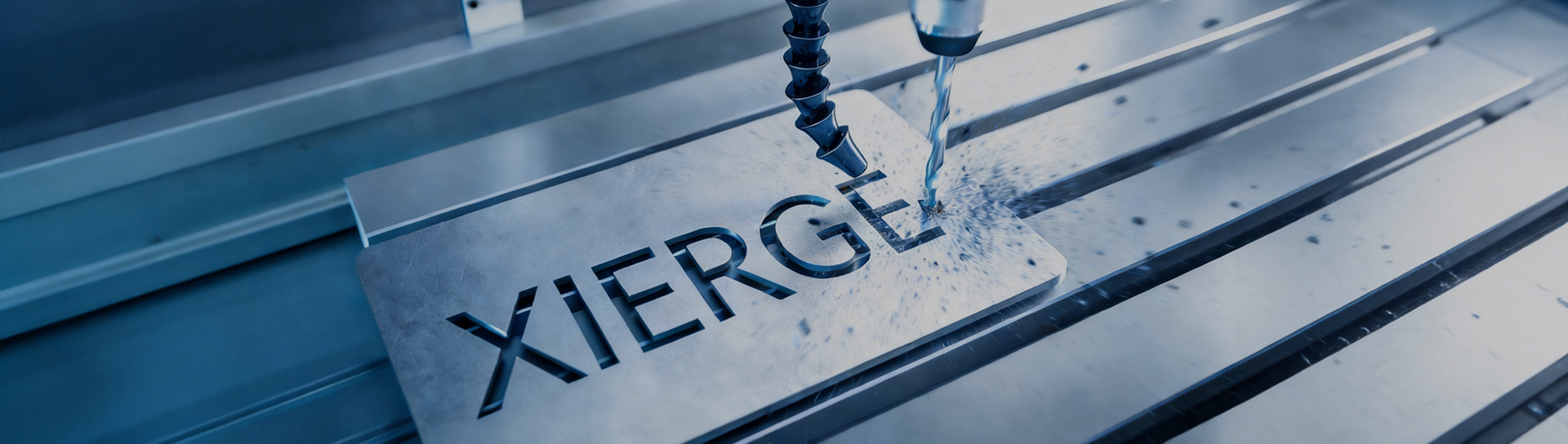
Why Are High-Precision CNC Machined Liquid Cooling Components the Essential Key to Unleashing Massive AI Computing Power?
Content
- 1 Why AI Servers Have Outgrown Air Cooling
- 2 Why Precision Matters So Much in AI Liquid Cooling Components
- 3 Core Components of an AI Server Liquid Cooling System
- 4 Materials Used in High-Precision Liquid Cooling Parts
- 5 Manufacturing Techniques Behind High-Precision Cold Plates
- 6 Design Considerations for Specifying AI Liquid Cooling Parts
- 7 Reliability and Long-Term Operation
- 8 Industry Trends Shaping AI Liquid Cooling Component Design
The rapid growth of AI training and inference workloads has pushed data center thermal management well past the limits of traditional air cooling. Modern AI accelerator chips routinely draw several hundred watts each, and dense server racks packed with these accelerators can generate heat loads that air-cooling infrastructure was never designed to handle efficiently. This is the environment in which high-precision AI server liquid cooling parts have become essential rather than optional — the cold plates, manifolds, quick-disconnect fittings, and pumps engineered to remove heat directly from the hottest components with tight tolerances and exceptional reliability. This article examines what these components are, why precision engineering matters so much in this application, and what data center operators and system integrators should understand when specifying liquid cooling hardware for AI infrastructure.
Why AI Servers Have Outgrown Air Cooling
Traditional data center cooling relies on forcing chilled air across server components, drawing heat away through convection. This approach worked well for decades of general-purpose computing, where individual processors typically dissipated well under 150 watts. AI accelerators used for large-scale model training and inference, however, frequently dissipate 400 to 700 watts or more per chip, and a single server may contain eight or more of these accelerators alongside supporting CPUs, memory, and networking hardware.
At this power density, air simply cannot carry heat away fast enough without requiring enormous airflow volumes, oversized heat sinks, and correspondingly high fan power consumption — itself a significant and growing contributor to overall data center energy use. Liquid cooling addresses this fundamentally, since liquid coolant can absorb and transport far more heat per unit volume than air, allowing much smaller, more targeted cooling components to manage the same thermal load.
The Shift to Direct-to-Chip Cooling
Rather than cooling the entire server cabinet with liquid, most modern AI liquid cooling architectures use a direct-to-chip approach, where a cold plate is mounted directly onto the highest-heat components — typically the GPU or AI accelerator package and sometimes the CPU — while coolant circulates through internal channels within that cold plate, absorbing heat at the source before it can spread through the rest of the server chassis.
Why Precision Matters So Much in AI Liquid Cooling Components
Unlike general industrial cooling equipment, AI server liquid cooling parts operate under extremely tight physical, thermal, and reliability constraints, which is why "high-precision" engineering is not a marketing phrase but a genuine technical requirement.
Tight Thermal Contact Tolerances
The cold plate's base must sit in near-perfect flat contact with the chip package to minimize thermal resistance at the interface. Even microscopic surface irregularities can create air gaps that significantly reduce heat transfer efficiency, which is why cold plate base surfaces are typically manufactured to very tight flatness and surface finish tolerances, often measured in single-digit micrometers.
Internal Microchannel Precision
Inside a modern cold plate, heat is often removed through an array of extremely fine internal microchannels or fin structures that maximize surface area contact between the coolant and the metal base. These structures must be manufactured with high dimensional accuracy to achieve their designed flow characteristics and heat transfer coefficients — inconsistent channel dimensions can create uneven flow distribution, localized hot spots, and reduced overall cooling performance.
Leak-Free Sealing Under Continuous Pressure
AI servers using liquid cooling operate continuously, often for years, under constant internal fluid pressure. Any seal or fitting failure risks not just cooling performance but potential coolant leakage onto sensitive, expensive electronic hardware. This makes seal design, gasket material selection, and fitting manufacturing tolerances a critical precision engineering concern throughout the entire liquid cooling loop.
Consistency Across Mass Deployment
Hyperscale AI data centers deploy liquid cooling components across thousands of servers simultaneously. Manufacturing consistency — ensuring that the one-thousandth cold plate performs identically to the first — is essential to predictable, uniform thermal performance across an entire fleet, and any part-to-part variation can create thermal imbalances that affect chip performance, reliability, or lifespan.
Core Components of an AI Server Liquid Cooling System
Cold Plates
Cold plates are the component in direct thermal contact with the heat-generating chip, typically constructed from copper or aluminum for their excellent thermal conductivity. Internally, cold plates feature engineered channel or fin structures designed to maximize coolant contact with the heated surface while minimizing pressure drop across the plate, balancing cooling performance against the pumping power required to circulate coolant through the system.
Manifolds
Manifolds distribute coolant from a central supply line to multiple individual servers or components within a rack, and collect returning heated coolant back into the main loop. Rack-level manifolds must be precisely engineered to balance flow evenly across all connected servers, since uneven flow distribution can leave some servers under-cooled relative to others, even within the same rack.
Quick-Disconnect Couplings
Because servers in a liquid-cooled environment must be serviceable — removed, repaired, or replaced without draining an entire cooling loop — quick-disconnect (QD) fittings are a critical component. High-precision QD couplings are engineered to seal reliably and consistently across thousands of connect-disconnect cycles, with minimal coolant spillage (often described as "dripless" or "low-drip" designs) during service events.
Pumps
Pumps circulate coolant through the cooling loop at controlled flow rates and pressures. In AI server applications, pump reliability is especially critical since pump failure can quickly lead to thermal throttling or shutdown of high-value compute hardware; many systems incorporate redundant pump configurations to maintain cooling continuity even if a single pump unit fails.
Coolant Distribution Units (CDUs)
A CDU acts as the interface between the facility's primary cooling infrastructure and the server-level liquid cooling loop, often isolating the two fluid circuits to protect sensitive server-side components from facility water quality issues, while also providing flow monitoring, filtration, and leak detection capability at a centralized point.
Sensors and Monitoring Hardware
Temperature, flow rate, and pressure sensors integrated throughout the liquid cooling loop provide the real-time data needed to detect developing issues — such as a partially blocked cold plate or a slow leak — before they escalate into hardware damage or unplanned downtime.
| Component | Primary Function | Key Precision Requirement |
|---|---|---|
| Cold plate | Direct chip-level heat removal | Base flatness, microchannel accuracy |
| Manifold | Coolant distribution across servers | Balanced flow across all connections |
| Quick-disconnect coupling | Serviceable, leak-free connections | Reliable sealing across repeated cycles |
| Pump | Coolant circulation | Consistent flow rate and pressure, reliability |
| CDU | Facility-to-server loop interface | Filtration, isolation, monitoring accuracy |
| Sensors | Real-time condition monitoring | Measurement accuracy and response time |
Materials Used in High-Precision Liquid Cooling Parts
Copper
Copper remains the preferred material for cold plate construction due to its excellent thermal conductivity, allowing efficient heat transfer from the chip surface into the circulating coolant. Copper cold plates are often manufactured using precision machining, skiving, or additive manufacturing techniques to produce the fine internal channel structures needed for optimal performance.
Aluminum
Aluminum offers a lighter-weight, generally lower-cost alternative to copper, with somewhat lower thermal conductivity. Aluminum components are sometimes used in manifolds or larger structural cooling parts where weight and cost considerations outweigh the marginal thermal conductivity advantage copper would provide in those specific locations.
Stainless Steel and Engineering Polymers
Fittings, quick-disconnect housings, and manifold bodies are often constructed from stainless steel or high-performance engineering polymers selected for corrosion resistance, dimensional stability, and compatibility with the specific coolant chemistry used in the system.
Elastomer Seals and Gaskets
Seal material selection is critical to long-term leak prevention, with materials chosen for compatibility with the coolant chemistry, resistance to degradation over years of continuous operation, and consistent sealing performance across the temperature range the system will experience.
Manufacturing Techniques Behind High-Precision Cold Plates
CNC Machining
Computer numerical control machining allows precise removal of material to form internal channel structures and achieve tightly controlled base flatness, offering high accuracy for cold plate designs with well-defined geometric channel patterns.
Skiving
Skiving is a specialized manufacturing process that shaves extremely thin fins directly from a solid block of copper or aluminum, creating dense, high-surface-area fin structures within a cold plate while maintaining strong thermal continuity between the fins and the base material.
Brazing and Vacuum Brazing
Many cold plate designs are assembled from multiple machined or stamped layers, joined together using brazing techniques — often vacuum brazing for the highest joint integrity — to create a sealed, leak-free internal channel structure without introducing thermal resistance at the joint.
Additive Manufacturing (3D Printing)
Metal additive manufacturing is increasingly used to produce cold plates with highly complex internal geometries that would be difficult or impossible to achieve through traditional machining, allowing engineers to optimize channel structures specifically for a given chip's heat distribution pattern.
Design Considerations for Specifying AI Liquid Cooling Parts
1. Thermal Design Power (TDP) Matching
Cold plates and broader cooling system components must be sized and engineered to match the specific thermal design power of the target chip, since undersized cooling capacity can lead to thermal throttling that directly reduces AI compute performance, while oversized capacity may add unnecessary cost and system complexity.
2. Coolant Chemistry Compatibility
Different liquid cooling systems use different coolant formulations, ranging from treated water-glycol mixtures to specialized dielectric fluids. All wetted components — cold plates, manifolds, seals, and fittings — must be verified as chemically compatible with the specific coolant used to prevent corrosion, seal degradation, or coolant contamination over time.
3. Flow Rate and Pressure Drop Requirements
Each cold plate and manifold introduces a certain pressure drop into the overall cooling loop. System designers must balance the flow rate needed for adequate cooling performance against the cumulative pressure drop across the entire loop, which directly affects pump sizing and overall system energy consumption.
4. Serviceability
Given the scale of AI data center deployments, cooling components must support efficient, low-risk service procedures, including reliable quick-disconnect fittings that allow individual servers to be removed and reinstalled without requiring the entire rack's cooling loop to be drained and refilled.
5. Leak Detection and Redundancy
Given the high value of the compute hardware being protected, robust leak detection systems and redundant pump or flow-path configurations are increasingly considered standard requirements rather than optional add-ons in mission-critical AI infrastructure deployments.
- Confirm cold plate thermal capacity matches target chip TDP with appropriate margin
- Verify coolant chemistry compatibility across all wetted materials
- Review flow rate and pressure drop specifications against overall loop design
- Confirm quick-disconnect fitting reliability rating (connect/disconnect cycle life)
- Evaluate leak detection and redundancy features for mission-critical deployments
- Request manufacturing tolerance documentation for cold plate flatness and channel geometry
Reliability and Long-Term Operation
AI data centers are expected to operate continuously for years, making the long-term reliability of liquid cooling components just as important as their initial thermal performance. Component fatigue, coolant chemistry degradation over time, and gradual wear on seals and fittings through repeated thermal cycling are all factors that reputable manufacturers account for in design validation testing, often including accelerated life testing to simulate years of operational stress within a compressed testing timeframe before a product is released to market.
Corrosion and Scaling Prevention
Even with treated coolant, long-term operation can lead to gradual corrosion or mineral scaling within cold plate microchannels if water chemistry is not properly maintained, potentially reducing cooling performance over time. High-precision components manufactured from corrosion-resistant materials, combined with proper facility-side water treatment and filtration, help minimize this risk.
Preventive Maintenance Practices
Routine monitoring of flow rates, pressure differentials, and coolant chemistry, combined with scheduled filter replacement and periodic inspection of fittings and seals, supports long-term system reliability and helps operators identify developing issues before they affect server uptime.
Industry Trends Shaping AI Liquid Cooling Component Design
Higher Chip Power Density
As AI accelerator power consumption continues to rise generation over generation, cold plate and cooling loop designs must continually evolve to handle greater heat loads within similar or even smaller physical footprints, driving ongoing innovation in microchannel design and materials engineering.
Standardization Efforts
As liquid cooling adoption scales across the data center industry, there is growing interest in standardizing certain interface dimensions and connection types for cooling components, aiming to improve interoperability between different server manufacturers and cooling infrastructure providers.
Two-Phase Cooling Development
Beyond traditional single-phase liquid cooling, some manufacturers are developing two-phase cooling components, where coolant partially vaporizes as it absorbs heat, offering the potential for even higher heat removal capacity per unit of coolant flow, though this approach introduces additional engineering complexity around phase management and system pressure control.
Integrated Monitoring and Predictive Maintenance
Increasing integration of sensors and data analytics directly into cooling components is enabling more sophisticated predictive maintenance approaches, allowing data center operators to anticipate component wear or developing issues before they result in unplanned downtime.
High-precision AI server liquid cooling parts have become foundational infrastructure for modern AI data centers, enabling the extreme power densities required by today's AI accelerators to be managed reliably and efficiently. From tightly toleranced cold plates and balanced manifolds to dependable quick-disconnect fittings and redundant pumps, every component in the liquid cooling loop must meet demanding precision and reliability standards to protect valuable compute hardware and sustain continuous operation at scale. As AI workloads continue to drive chip power consumption higher, the engineering behind these components will remain a critical, fast-evolving area of data center infrastructure, directly shaping how efficiently and reliably the next generation of AI computing can be delivered.
-
Why Are High-Precision CNC Machined Liquid Cooling Components the Essential Key to Unleashing Massive AI Computing Power?
The demand for effective thermal management has never been higher, and AI-driven precision CNC machined liquid cooling parts have emerged as one of the key manufacturing innovations meeting that dema...
-
Why Are High-Precision CNC Machined Liquid Cooling Components the Essential Key to Unleashing Massive AI Computing Power?
The rapid growth of AI training and inference workloads has pushed data center thermal management well past the limits of traditional air cooling. Modern AI accelerator chips routinely draw several h...
-
How Do High-Precision CNC Machined Liquid Cooling Parts Solve the Critical Thermal Challenges of Scaling AI Computing Power?
The rapid expansion of artificial intelligence workloads has placed unprecedented thermal demands on computing hardware, driving a corresponding evolution in the precision engineering required to man...
-
Why Leak-Free CNC Cold Plates Are Now Essential In Server Cooling?
Why Leak-Free CNC Machined Cold Plates Have Become A Requirement Rather Than An Option A leak-free cold plate has shifted from a desirable feature to a baseline requirement because server racks now p...
-
CNC Precision Machined Liquid Cooling Parts: Tolerances, Materials, Sealing
A water block can pass every dimensional report and still drip on the test bench, because its O-ring groove came off the machine a few hundredths of a millimeter oversize. Situations like this are wh...
-
CNC Precision Machined Power Tool Parts | Swiss-Type Turning & OEM Custom
When a power tool design moves from prototype to production, the parts that typically cause trouble are the small rotary and housing components: motor shafts, transmission shafts, spline shafts, valv...

- Products
- CNC Precision Machined Automotive Parts
- CNC Precision Machined Liquid Cooling Parts
- CNC Precision Machined Power Tool Parts
- CNC Precision Machined Optical Components
- Customize
- Swiss Turning
- Machining Center
- CNC Milling&Turning
- Centerless Grinding Machine
- Cylindrical Grinding Machine
- Contact
-
-
TEL: +86-0574-62480516

-
E-mail: [email protected]

-
Phone: +86-13175199595

-
Address: Address: No. 6 Shiji 1st Road, Mazhu Doumen Development Zone, Yuyao City, Zhejiang Province, China

-

