


 English
 中文简体

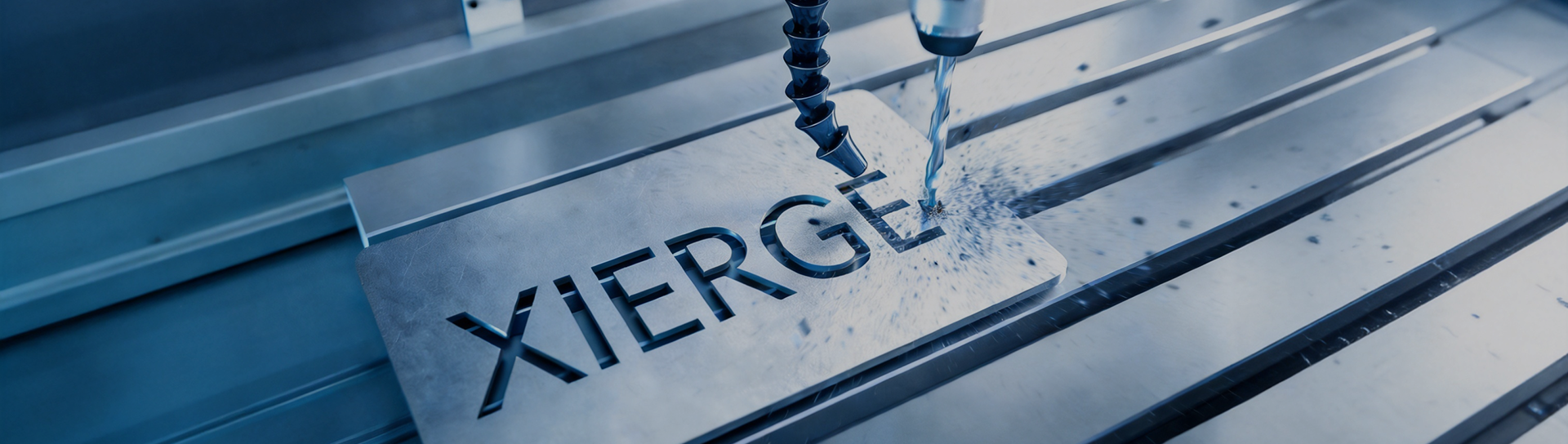
Precision Machining on a Swiss-type CNC Lathe Full Process
Inside Swiss-Type CNC Machining: From Raw Material to Finished Part
Swiss-type CNC lathes are widely used for machining small-diameter, high length-to-diameter ratio parts, thanks to their ability to combine multiple operations in a single setup. From bar stock feeding to final inspection, each stage of the process plays a role in maintaining dimensional stability and surface quality. The steps below, using 1215 free-cutting steel as an example, walk through this process.
The Machining Process, Step by Step
Step One: Auto-Feeding and Precision Clamping
Bar stock is automatically fed into the machine, removing the need for repeated manual loading. The material is then precisely clamped into position, providing a stable base for the turning and milling operations that follow. Consistent clamping is essential for dimensional consistency, particularly in batch production of precision parts, since clamping accuracy has a direct effect on the yield rate of finished components.
Step Two: Simultaneous Turning and Milling
A key strength of Swiss-type machining is its ability to perform turning and milling simultaneously within a single setup. Compared with traditional step-by-step machining, this approach reduces the cumulative error that can result from repeated clamping and repositioning, while also shortening the process flow for each part — making it well suited to small-diameter, long parts.
Step Three: Precision Part Formation
Parts produced through this turning-and-milling process come out with stable dimensions and a smooth surface finish, meeting the tolerance and surface-quality requirements typical of precision components. The quality achieved at this stage has a direct bearing on whether a part meets the technical requirements of downstream assembly or end use.
Step Four: Inspection Right After Machining
Once a part comes off the machine, it undergoes a preliminary inspection — including dimensional checks — before moving to the next stage, rather than waiting for a full batch to be completed before checking. This allows deviations to be identified and addressed earlier in the process.
Taken together, these steps form a continuous flow from raw material to finished part, reflecting the level of automation, process integration, and in-process quality control involved in Swiss-type machining.
This type of precision machining is widely applied across industries such as automotive, machinery, medical, and home appliances, where component precision matters. Our company has been in operation since 1990, bringing over 30 years of manufacturing experience. We are equipped with Japanese-imported Star Swiss-type CNC lathes, domestic CNC lathes, machining centers, grinders, cleaning machines, and other production equipment, and we specialize in custom precision and general hardware parts manufacturing.
-
CNC Precision Machined Power Tool Parts | Swiss-Type Turning & OEM Custom
When a power tool design moves from prototype to production, the parts that typically cause trouble are the small rotary and housing components: motor shafts, transmission shafts, spline shafts, valv...
-
Process Optimization: Core Approaches to Boost CNC Machining Production Efficiency
In CNC machining production, efficiency improvement not only expands production capacity but also effectively cuts production costs and shortens delivery cycles, serving as a key pillar for sustaining...
-
CNC Machining Material Selection Guide: Match Production Demands and Ensure Product Quality
The quality of CNC-machined products is fundamentally determined by proper material selection and matching. Differences in machinability and mechanical properties of various materials directly affect ...
-
CNC Turning and Precision Metal Parts Manufacturing
CNC Turning and Precision Metal Parts Manufacturing Precision CNC machining is an essential process for manufacturing metal components used in a wide range of industrial applications. From aluminum pa...
-
Aluminum Swiss Screw Machined Parts: Precision, Tolerances, and Turnkey CNC Services
When a component must be small, precise, and produced in volume, aluminum Swiss screw machined parts are often the best answer. The Swiss-type lathe was developed for a challenge that ordinary turnin...
-
Design for CNC Machining: Practical DFM Guidelines for Precision Manufacturers
Designing for CNC machining is not simply about creating a 3D model that looks right. It is about making sure that every wall, hole, corner, and tolerance can be produced accurately, repeatedly, and ...

- Products
- CNC Precision Machined Automotive Parts
- CNC Precision Machined Liquid Cooling Parts
- CNC Precision Machined Power Tool Parts
- CNC Precision Machined Optical Components
- Customize
- Swiss Turning
- Machining Center
- CNC Milling&Turning
- Centerless Grinding Machine
- Cylindrical Grinding Machine
- Contact
-
-
TEL: +86-0574-62480516

-
E-mail: [email protected]

-
Phone: +86-13175199595

-
Address: Address: No. 6 Shiji 1st Road, Mazhu Doumen Development Zone, Yuyao City, Zhejiang Province, China

-

