


 English
 中文简体

Aluminum Swiss Screw Machined Parts: Precision, Tolerances, and Turnkey CNC Services
Content
- 1 What Are Aluminum Swiss Screw Machined Parts?
- 2 Why Choose Aluminum for Swiss Screw Machining?
- 3 Typical Aluminum Swiss Screw Machined Parts
- 4 Industries That Rely on These Parts
- 5 Our Swiss Turning Capabilities and Equipment
- 6 Quality Assurance for Aluminum Swiss Screw Machined Parts
- 7 Design Considerations for Aluminum Swiss Screw Parts
- 8 Start Your Aluminum Swiss Screw Machined Parts Project
When a component must be small, precise, and produced in volume, aluminum Swiss screw machined parts are often the best answer. The Swiss-type lathe was developed for a challenge that ordinary turning struggles with: holding long, slender workpieces with exceptional rigidity while cutting complex features in a single setup. At Xierge Precision Machinery, we have operated Swiss-type CNC machines for more than 30 years, and aluminum has become one of our most requested materials for this process.
This guide explains why aluminum and Swiss screw machining work so well together, what types of parts we produce, and how we keep tolerances reliable from the first piece to the final batch. If you are evaluating a new component, this information will help you decide whether Swiss screw machining is the right production method.
What Are Aluminum Swiss Screw Machined Parts?
Swiss screw machining is a turning process that uses a guide bushing positioned close to the cutting tool. This design supports the workpiece right at the point of cutting, so thin or long parts do not deflect under tool pressure. The sliding headstock feeds the bar stock through the bushing, while tools cut near that support point. The result is a part with consistent roundness, straightness, and surface finish, even for small diameters and high length-to-diameter ratios.
When the raw material is aluminum, the advantages multiply. Aluminum is lightweight, corrosion-resistant, thermally conductive, and easy to cut at high speeds. Those characteristics make it a natural fit for Swiss-type production, especially for customers who need thousands of identical parts with minimal variation. It is also why aluminum Swiss screw machined parts appear in so many demanding applications.
Why Choose Aluminum for Swiss Screw Machining?
Aluminum is not a single metal; it comes in many alloys with different mechanical properties. Our engineers work with customers to select the right alloy for the part's function, production volume, and finishing requirements.
| Alloy | Strength / Machinability | Typical Applications |
|---|---|---|
| 6061 | Good strength, excellent machinability | Structural and automotive components |
| 6063 | Good corrosion resistance, medium strength | Fittings, housings, architectural parts |
| 7075 | Very high strength, more difficult to machine | High-performance mechanical parts |
| 2011 | Free-machining, high cutting speeds | Precision turned parts, shafts, nozzles |
The alloy table above is a starting point. We also evaluate thread quality, anodizing requirements, and expected service loads before recommending a material.
Apart from alloy selection, aluminum offers practical production benefits in Swiss screw machining:
- Excellent machinability: Aluminum cuts cleanly, extends tool life, and permits higher spindle speeds.
- Light weight: It reduces the weight of automotive, power tool, and optical assemblies.
- Corrosion resistance: Many aluminum alloys form a protective oxide layer that suits harsh environments.
- Thermal and electrical conductivity: Aluminum works well for heat exchange and electronic enclosures.
Typical Aluminum Swiss Screw Machined Parts
In our workshop, aluminum Swiss screw machined parts include a broad family of rotational and near-net-shape components. Many of these parts move directly into assemblies, so dimensional accuracy and surface quality are essential.
- Shafts and spindles: motor shafts, drive shafts, slender shafts, and gear shafts
- Sleeves and housings: shock absorber sleeves, solenoid valve sleeves, and base housings
- Flow-control parts: valve spools, valve stems, fluid connectors, and nozzles
- Fasteners and pins: precision bolts, locating pins, and threaded fittings
- Precision rings and shims: bearing rings and optical shims
For more examples of what can be achieved, browse our precision machined aluminum parts page. It shows the variety of geometries that a Swiss-type lathe can produce with aluminum, including custom features such as cross holes, flats, threads, and grooves.
Industries That Rely on These Parts
Aluminum Swiss screw machined parts appear in almost every sector that uses compact mechanical assemblies. We manufacture them for automotive, liquid cooling, power tools, optical instrumentation, medical devices, and general industrial equipment.
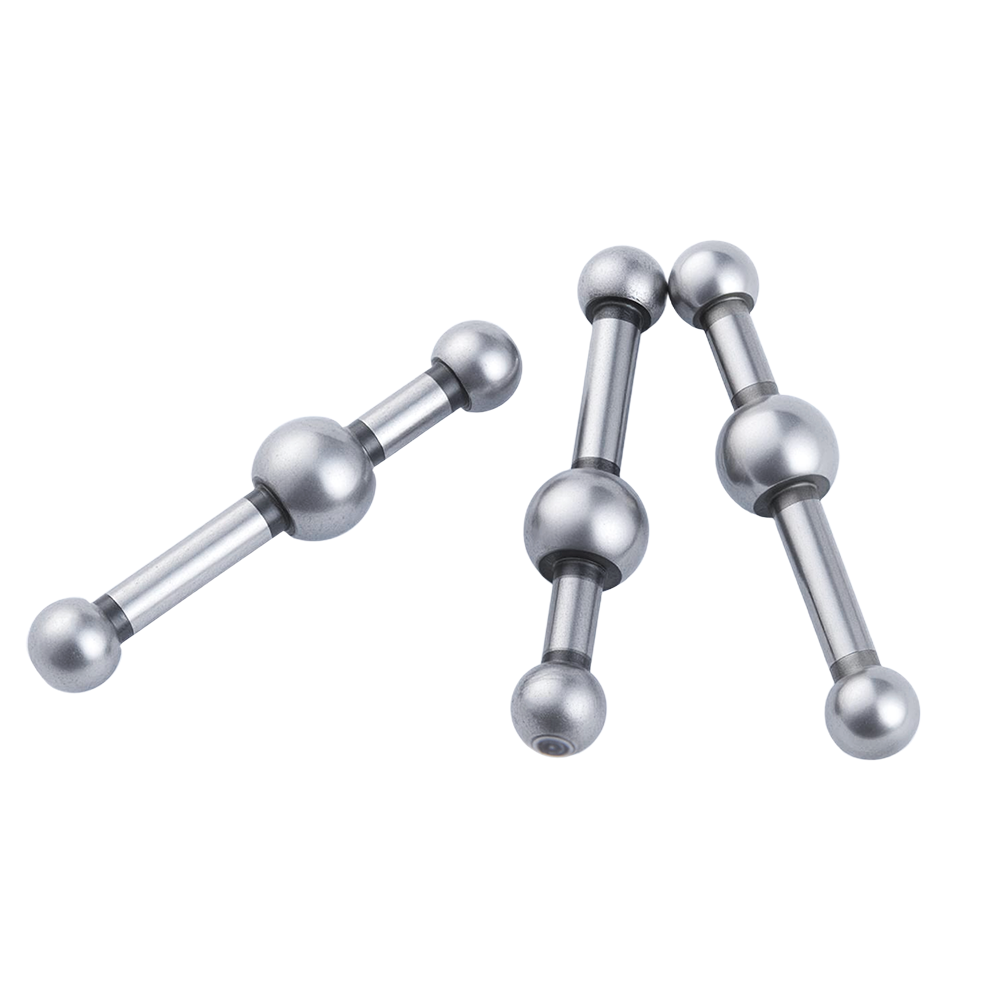 Precision Machined Automotive Locating Pin and Adjustment BoltsThese aluminum automotive components support steering, braking, and sensor systems. The locating pin uses 20CrMo with carburizing, while adjustment bolts feature black anodizing, offering durability and corrosion resistance.View Product →
In automotive, these parts support steering, braking, sensor, and transmission systems. A sensor housing or valve sleeve machined from aluminum adds little weight, resists corrosion, and holds the tight tolerances required for reliable operation. Because these components sit inside larger systems, consistency from one part to the next is critical.
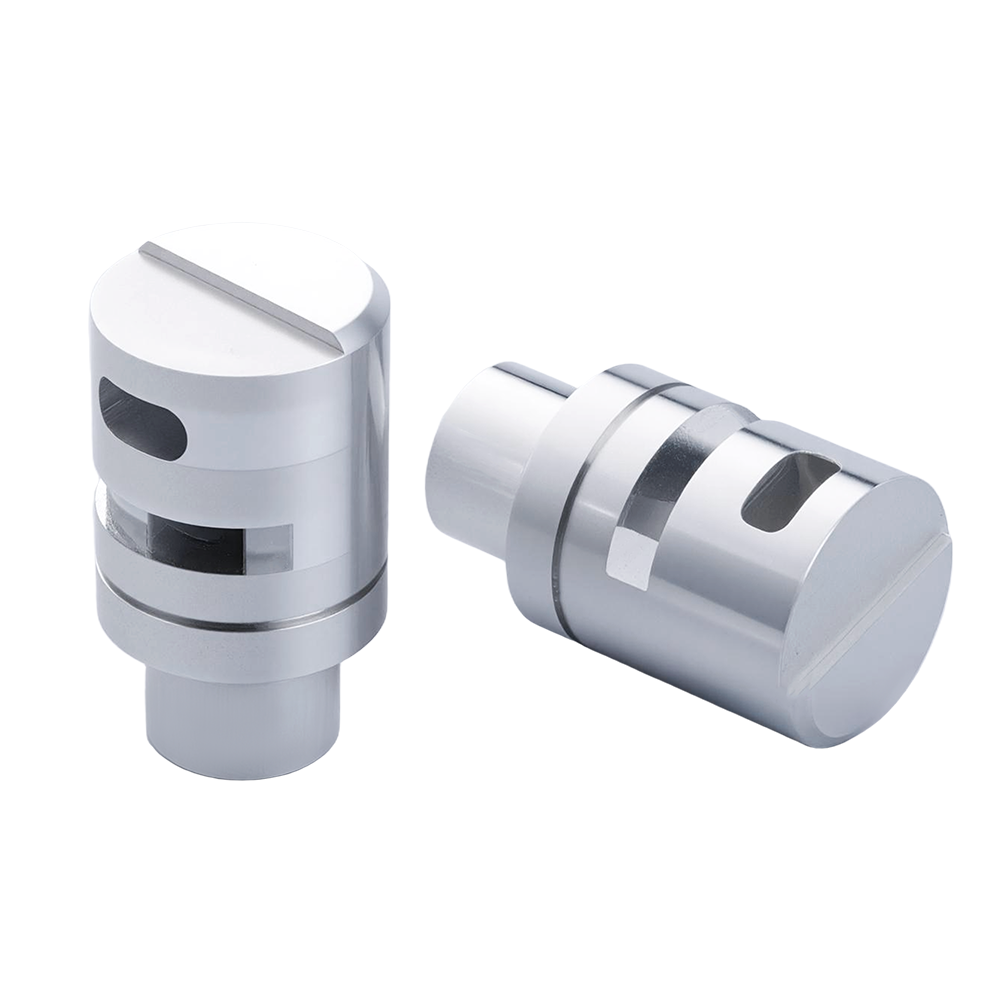 Aluminum Valve Cores, Nozzles, and Sleeves for Liquid CoolingThese liquid cooling components provide clean, leak-proof fluid paths and efficient heat transfer. Machined from aluminum with natural finish, they ensure dimensional consistency for reliable assembly and stable performance.View Product →
Liquid cooling systems depend on clean, leak-proof fluid paths. Aluminum connectors, nozzles, and fittings from Swiss screw machining provide the dimensional consistency needed for easy assembly and stable performance. The material's thermal conductivity also helps transfer heat efficiently.
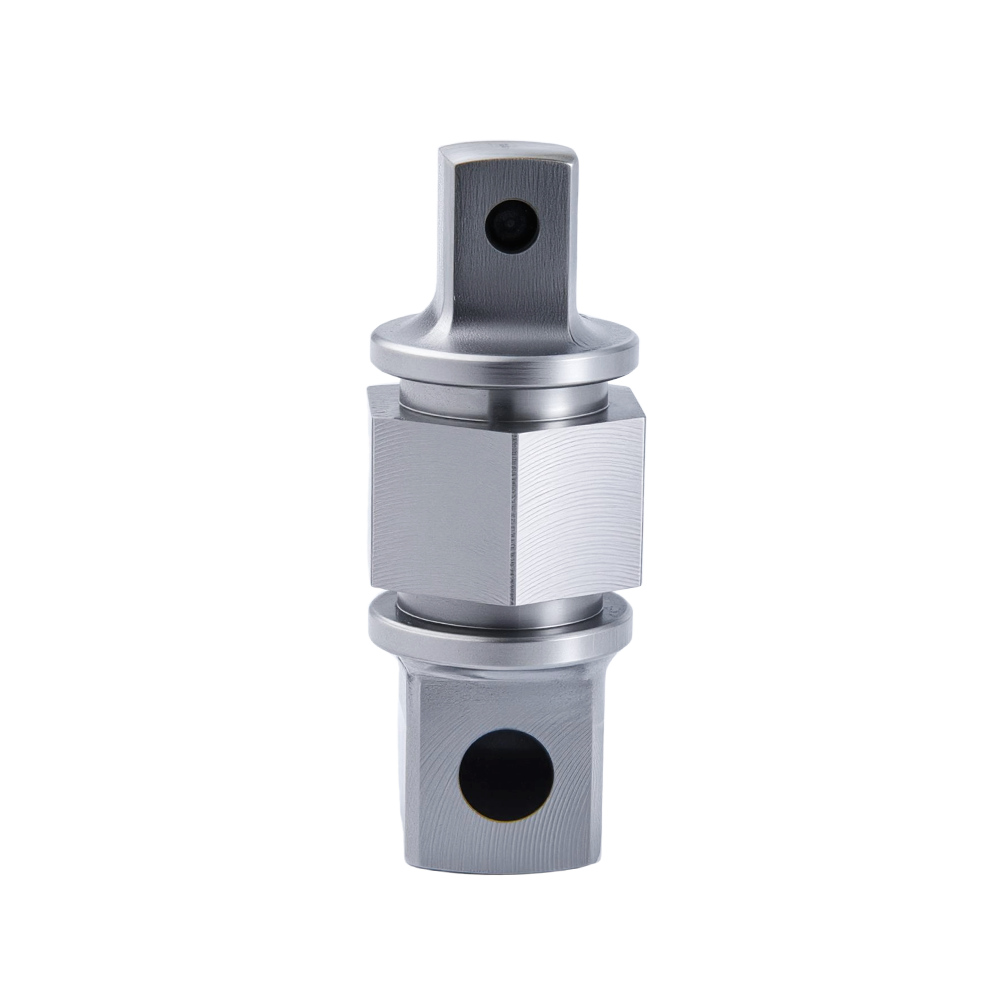 Precision Machined Power Tool Shafts, Gears, and Transmission PartsThese components for power tools include motor shafts, planetary gear shafts, and small module gears. Aluminum's stiffness and low inertia help tools run cooler and last longer under heavy use, with precision ensured by Swiss machining.View Product →
Power tool manufacturers also choose aluminum for motor shafts, gear shafts, and drive components. The material's stiffness and low inertia help tools run cooler and last longer under heavy use. From compact drills to industrial fastening tools, Swiss screw machining delivers the precision these products need.
Our Swiss Turning Capabilities and Equipment
Our ability to make high-quality aluminum Swiss screw machined parts starts with the right machines. Our facility includes Japanese Star CNC Swiss-type turning machines, CNC lathes, machining centers, and grinding equipment. This lets us complete turning, milling, drilling, and grinding operations under one roof, which reduces handling and improves accuracy.
We also maintain Swiss-type CNC machined parts in our standard production portfolio. Alongside Swiss turning, we offer centerless grinding, cylindrical grinding, CNC milling, and CNC turning for secondary operations. Some parts come directly off the Swiss machine ready to use; others need a grinding pass for a tight bearing diameter or a milling operation for a precise face.
- Swiss-type turning for micro to medium diameter parts
- Machining centers for milling and drilling of complex faces
- Centerless grinding for precise outer diameters
- Cylindrical grinding for tight journal and bearing surfaces
This combination of equipment makes us a single partner for both primary Swiss machining and the finishing steps that follow.
Quality Assurance for Aluminum Swiss Screw Machined Parts
Even the best machine cannot produce good parts from inconsistent material. We use quality aluminum stock from established suppliers, then verify dimensions during and after production. Our inspection instruments are imported from Japan and Germany, and every shipment receives a final check before it leaves our factory.
For custom OEM requests, we review your drawings, tolerances, and surface finish specifications before cutting begins. This early collaboration avoids surprises and ensures that the first article matches the production intent. It also helps us identify features that could be simplified to lower cost without changing function.
Design Considerations for Aluminum Swiss Screw Parts
To get the most from Swiss screw machining, keep these points in mind during design:
- Maintain a consistent wall thickness to reduce distortion in thin sleeves.
- Avoid sharp internal corners; specify a radius that a standard tool can produce.
- Use common thread depths and diameters when possible to reduce cycle time.
- Specify only critical tolerances; every extra tight tolerance adds cost.
- Consider anodizing or other finishes after machining.
During a design-for-manufacturability review, our engineers will flag features that are difficult to hold or expensive to produce. This is a normal part of our OEM service. We want your aluminum Swiss screw machined parts to be manufacturable without compromising function.
Start Your Aluminum Swiss Screw Machined Parts Project
Whether you need a single prototype or a long production run, we are ready to support your aluminum Swiss screw machined parts requirements. Send us your part drawing, target quantity, and critical dimensions. Our engineers will respond with a process recommendation, material selection, and a competitive quotation.
As a partner with more than 30 years of precision machining experience, we believe the best projects begin with honest technical conversation. Let's discuss how Swiss screw machining can make your aluminum components faster, stronger, and more economical.
-
CNC Precision Machined Automotive Parts: Materials, Tolerances, and How to Choose the Right Manufacturer
CNC precision machined automotive parts are components produced by computer-controlled subtractive manufacturing processes — turning, milling, drilling, grinding, and multi-axis machining — to dimensi...
-
CNC Precision Machined Liquid Cooling Parts: Tolerances, Materials, Sealing
A water block can pass every dimensional report and still drip on the test bench, because its O-ring groove came off the machine a few hundredths of a millimeter oversize. Situations like this are wh...
-
CNC Precision Machined Power Tool Parts | Swiss-Type Turning & OEM Custom
When a power tool design moves from prototype to production, the parts that typically cause trouble are the small rotary and housing components: motor shafts, transmission shafts, spline shafts, valv...
-
CNC Precision Machined Automotive Parts: Materials, Tolerances & Applications
Every confident start on a winter morning, every quiet stretch of highway, every smooth brake application depends on hundreds of small metal parts doing their jobs without complaint. That is the worl...
-
CNC Turning and Precision Metal Parts Manufacturing
CNC Turning and Precision Metal Parts Manufacturing Precision CNC machining is an essential process for manufacturing metal components used in a wide range of industrial applications. From aluminum pa...
-
How Do You Choose Precision CNC Machining Parts Based on Tolerances, Materials, and Supplier Capabilities?
A precision CNC machining part earns its name on the production floor, not in a brochure. The test is simple to state and hard to pass: does the part hold its specified dimension — often within ±0.01...

- Products
- CNC Precision Machined Automotive Parts
- CNC Precision Machined Liquid Cooling Parts
- CNC Precision Machined Power Tool Parts
- CNC Precision Machined Optical Components
- Customize
- Swiss Turning
- Machining Center
- CNC Milling&Turning
- Centerless Grinding Machine
- Cylindrical Grinding Machine
- Contact
-
-
TEL: +86-0574-62480516

-
E-mail: [email protected]

-
Phone: +86-13175199595

-
Address: Address: No. 6 Shiji 1st Road, Mazhu Doumen Development Zone, Yuyao City, Zhejiang Province, China

-

