


 English
 中文简体

Conversion Coating vs Anodizing: How to Choose the Right Aluminum Finish
Content
- 1 What Each Finish Actually Is
- 2 Conversion Coating vs Anodizing: Side by Side
- 3 Conductivity and Grounding Decide More Projects Than Anything Else
- 4 Thickness, Tolerances, and Masking
- 5 Where Each Finish Earns Its Place
- 6 Cost, Lead Time, and Process Layering
- 7 How to Call Out the Finish on Your Drawing
- 8 Quick Decision Guide
If you have ever stared at a drawing wondering whether the finishing note should read "chem film" or "anodize," you are in good company. The two finishes get compared constantly, and the honest answer is that they are not really competing for the same job. They protect aluminum in different ways, and the right choice usually comes down to three questions: does the part need to conduct electricity, how tight are the tolerances, and how much wear will it actually see?
We machine aluminum, brass, and stainless parts for automotive, liquid cooling, optical, power tool, and appliance customers, and nearly every aluminum print that crosses our desk carries a finishing callout. Over the years we have watched a lot of parts get finished the wrong way for reasons that were easy to catch at the drawing stage. Here is what we usually tell engineers when they ask.
What Each Finish Actually Is
Conversion Coating (Chem Film, Alodine, Chromate)
Conversion coating is a family rather than a single product. It includes chromate conversion coatings, the ones you may know as chem film, Alodine, Iridite, or Bonderite, along with the trivalent and chrome-free chemistries that have replaced hexavalent chromium in many supply chains.
The process is chemical, not electrical. After cleaning, the part is dipped in an acidic bath that reacts with the aluminum surface and converts a very thin outer layer into a mixed oxide film. Nothing is deposited on top of the metal; the metal itself changes. Film thickness typically lands between roughly 0.3 and 3 microns, thin enough that most tolerance stacks can simply ignore it.
Because the film is thin and slightly porous, it stays electrically conductive and gives paint, primer, and structural adhesive far better grip than bare aluminum. What it does not do is add meaningful hardness or wear resistance.
Anodizing (Type II and Type III)
Anodizing works electrochemically. The part becomes the anode in an acid electrolyte, and current drives oxygen into the aluminum surface, growing an oxide layer out of the base metal instead of laying something on top of it.
Type II sulfuric anodizing builds a layer of roughly 5 to 25 microns and can be left clear or dyed. Type III, usually called hard anodizing, runs in a colder and more aggressive bath and produces 25 to 75 microns of a denser, considerably harder oxide. In both cases the coating grows partly into the part and partly outward, so about half the thickness sits above the original surface dimension.
That growth is the detail that trips people up. Anodizing cannot peel or flake because it is the surface of the part, it is an excellent electrical insulator, and Type III shrugs off wear that would destroy a chem film in an afternoon.
Conversion Coating vs Anodizing: Side by Side
The table below pulls the practical differences into one place. Treat the numbers as typical ranges rather than guarantees, because alloy, temper, bath chemistry, and the finisher's process control all shift the result.
| Property | Conversion Coating (Chem Film) | Anodizing (Type II / Type III) |
|---|---|---|
| How the film forms | Chemical reaction in an acid bath | Electrochemical growth; part is the anode |
| Typical thickness | 0.3 to 3 microns | 5 to 25 microns (Type II); 25 to 75 microns (Type III) |
| Dimensional effect | Negligible for most tolerances | Grows roughly half inward, half outward |
| Corrosion resistance | Good, especially under paint | Very good to excellent, even unpainted |
| Hardness and wear | Minimal | Moderate (Type II); high (Type III) |
| Electrical conductivity | Conductive | Insulating |
| Color and appearance | Clear to light iridescent gold or blue-grey | Clear, black, or dyed; matte to glossy |
| Paint and adhesive adhesion | Excellent primer layer | Good, though sealing can reduce it |
| Relative cost | Lower | Higher, especially for hard anodize |
| Typical use | Grounding, EMI, tight tolerances, painted parts | Wear surfaces, outdoor exposure, cosmetic parts |
Conductivity and Grounding Decide More Projects Than Anything Else
In electronics enclosures, cold plates, battery hardware, and anything with a bonding requirement, the comparison ends quickly: anodizing insulates, chem film conducts. If a housing has to bond reliably to a chassis, or a cold plate must make metal-to-metal contact at its mounting face, a conversion coating is often the only workable option without adding masking steps.
We run into this constantly with liquid cooling hardware. A manifold or nozzle assembly usually needs corrosion protection on every surface, yet still has to ground through its mounting bosses. The usual compromise is a full chem film, or anodize with the grounding pads masked off. Masking always adds cost, handling, and one more chance for a missed area.
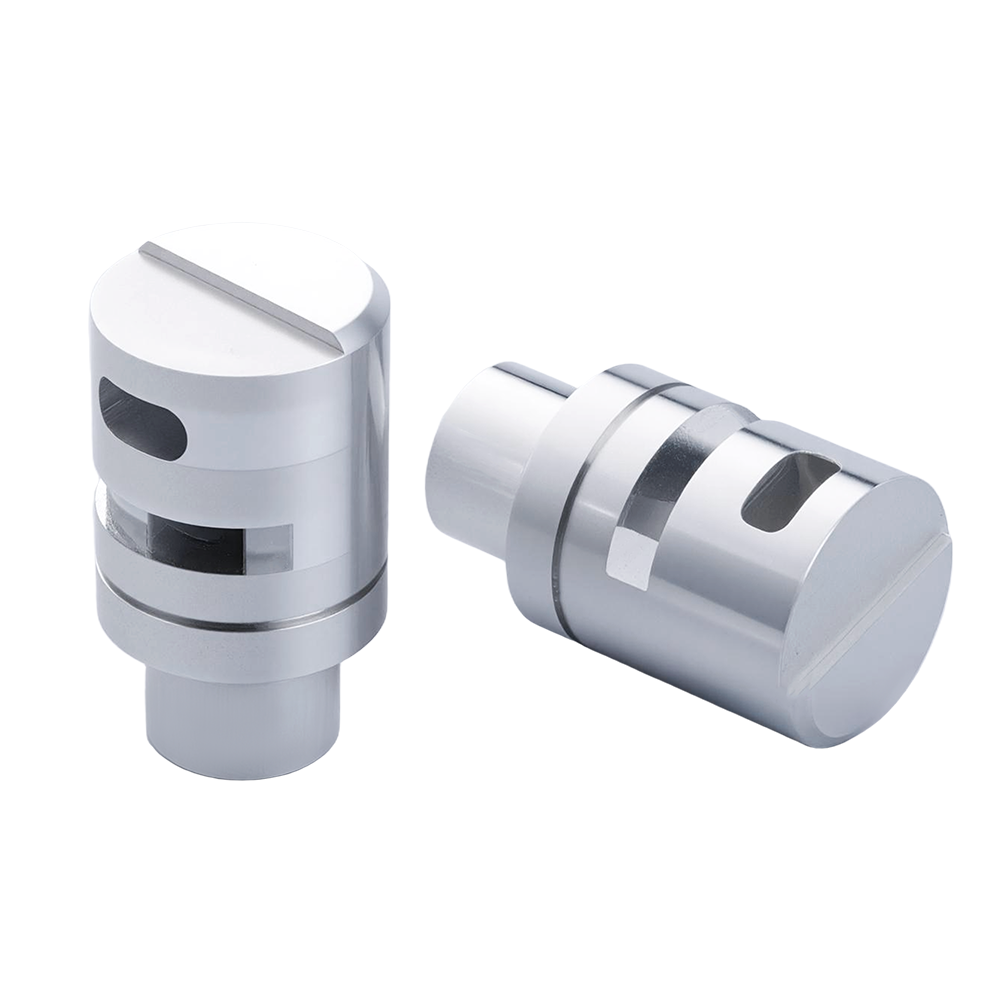 CNC Precision Machined Liquid Cooling ComponentsExplore CNC-machined liquid cooling valve cores, nozzles, sleeves, connectors, and tube fittings for coolant flow control assemblies and customized OEM production.View Product →
If your part carries both requirements, it is worth deciding early which surfaces are electrical and which are cosmetic, because that decision determines the masking plan before the first chip is cut.
Thickness, Tolerances, and Masking
The dimensional question is where anodizing quietly creates scrap. A 25 micron Type II layer means roughly 12 to 13 microns of growth per surface. On a diameter held to plus or minus 10 microns, that is the entire tolerance band. Threads get tighter, press fits get looser, and small bores can close up enough to reject a pin gauge. Chem film, at well under 3 microns, is usually ignored in the stack-up.
Two habits keep anodized parts out of trouble. First, mask anything that must stay conductive or dimensionally critical: tapped holes, bearing bores, sealing faces, and electrical contact pads. Second, state clearly on the print whether dimensions apply before or after finishing. The small turned parts that come off our Swiss lathes are a good example, because a slender shaft can carry threads, a ground journal, and a sealing shoulder within a few millimeters, and each feature reacts a little differently to a 25 micron oxide layer.
Where Each Finish Earns Its Place
Aerospace and defense work leans heavily on chem film, largely because of the conductivity and paint adhesion requirements on airframe components. Automotive brackets, sensor housings, and suspension hardware often get a conversion coating as a base for e-coat or paint, while parts that see sliding contact typically go the anodized route.
Optical instruments are an interesting middle case. Matte black anodizing is the standard way to kill stray light inside a housing, but the shims and mounting interfaces inside the same assembly may need to stay conductive, which pushes them toward chem film or toward masking during the anodize run.
 CNC Precision Machined Optical Shims and SpacersBrowse precision optical shims and spacers for lens support, optical path spacing, and system stability in imaging, laser, and inspection equipment.View Product →
Automotive is similar in spirit. A shock absorber sleeve or an electromagnetic sensor housing may be painted on the outside and grounded on the inside, and the finishing note has to reflect both realities rather than picking one finish for the whole part.
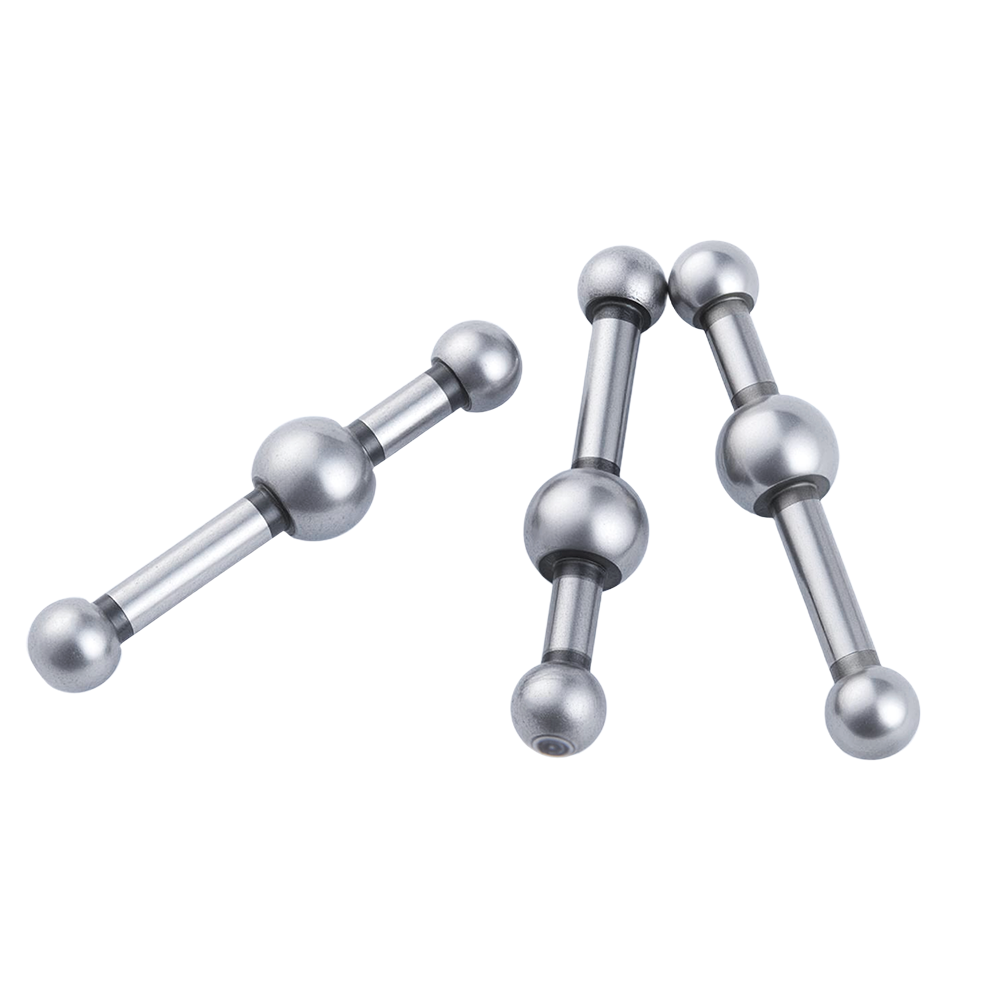 CNC Precision Machined Automotive Parts and ComponentsExplore CNC-machined automotive shafts, valve sleeves, valve cores, and transmission components, including anodized, plated, and heat-treated examples, for OEM programs.View Product →
Cost, Lead Time, and Process Layering
Conversion coating is generally the cheaper and faster of the two. It runs at lower temperatures, takes less time in the tank, and consumes far less masking labor. Anodizing costs more, and hard anodizing costs more again, because the bath is harder to control and the parts often need racking points and post-treatment.
The two finishes can also work together. A chem film applied as a base layer gives paint or adhesive a strong bond, and some specifications stack finishing steps in a defined order for exactly that reason. What you should avoid is treating the finish as an afterthought added at the end of a quote, because the finishing step frequently determines whether the machined tolerances you paid for survive the process.
How to Call Out the Finish on Your Drawing
A few lines of clear direction on the print save everyone a round of emails:
- Name the specification and the class, not just "anodize." Type II and Type III behave differently and cost differently.
- State the alloy and temper. Some 2xxx and 7xxx grades anodize to a darker, less uniform appearance than 6061.
- Mark masked and unmasked areas with a clear note or a shaded zone on the drawing.
- Say whether the listed dimensions apply before or after finishing, especially on bores, threads, and fits.
- Only specify a color if the color genuinely matters, since dyes add cost and variability.
When all of that is in place, the finish stops being a debate and becomes a process step. If you are working through a new part and want the finishing decision made alongside the machining plan, our OEM machining team is happy to review the drawing with you before anything is cut.
Quick Decision Guide
- Needs to conduct, ground, or bond: conversion coating.
- High wear, sliding contact, or outdoor exposure: anodize, and consider Type III for the worst cases.
- Cosmetic color or matte black interior surfaces: anodize.
- Tight bores and threads with no wear requirement: conversion coating, or anodize with masking.
- Part will be painted or adhesively bonded: chem film is the better primer.
- Both protection and conductivity on different surfaces: chem film overall, or anodize with masked contact points.
Conversion coating and anodizing are both good answers, just to different questions. If the part has to carry current or hold a tight fit, chem film is almost always the safer call. If it has to survive abrasion, weather, or a customer's cosmetic standard, anodizing earns its extra cost. Take five minutes at the drawing stage to decide which problem you are actually solving, and the rest of the process gets considerably simpler.
-
CNC Precision Machined Automotive Parts: Materials, Tolerances, and How to Choose the Right Manufacturer
CNC precision machined automotive parts are components produced by computer-controlled subtractive manufacturing processes — turning, milling, drilling, grinding, and multi-axis machining — to dimensi...
-
How Do You Choose Precision CNC Machining Parts Based on Tolerances, Materials, and Supplier Capabilities?
A precision CNC machining part earns its name on the production floor, not in a brochure. The test is simple to state and hard to pass: does the part hold its specified dimension — often within ±0.01...
-
How Do High-Precision CNC Machined Liquid Cooling Parts Solve the Critical Thermal Challenges of Scaling AI Computing Power?
The rapid expansion of artificial intelligence workloads has placed unprecedented thermal demands on computing hardware, driving a corresponding evolution in the precision engineering required to man...
-
Steel Turned Parts: CNC Turning Materials, Tolerances and How to Source
Steel turned parts rarely get noticed. They sit inside a shock absorber, a liquid-cooling manifold, a power tool gearbox, or an optical instrument, quietly holding a shaft on centre, seating a valve,...
-
Why Are High-Precision CNC Machined Liquid Cooling Components the Essential Key to Unleashing Massive AI Computing Power?
The demand for effective thermal management has never been higher, and AI-driven precision CNC machined liquid cooling parts have emerged as one of the key manufacturing innovations meeting that dema...
-
Aluminum Swiss Screw Machined Parts: Precision, Tolerances, and Turnkey CNC Services
When a component must be small, precise, and produced in volume, aluminum Swiss screw machined parts are often the best answer. The Swiss-type lathe was developed for a challenge that ordinary turnin...

- Products
- CNC Precision Machined Automotive Parts
- CNC Precision Machined Liquid Cooling Parts
- CNC Precision Machined Power Tool Parts
- CNC Precision Machined Optical Components
- Customize
- Swiss Turning
- Machining Center
- CNC Milling&Turning
- Centerless Grinding Machine
- Cylindrical Grinding Machine
- Contact
-
-
TEL: +86-0574-62480516

-
E-mail: [email protected]

-
Phone: +86-13175199595

-
Address: Address: No. 6 Shiji 1st Road, Mazhu Doumen Development Zone, Yuyao City, Zhejiang Province, China

-

