


 English
  中文简体
中文简体 
How Do You Choose Precision CNC Machining Parts Based on Tolerances, Materials, and Supplier Capabilities?
Content
A precision CNC machining part earns its name on the production floor, not in a brochure. The test is simple to state and hard to pass: does the part hold its specified dimension — often within ±0.01 mm, and within a few microns after grinding — on piece 5,000 as reliably as it did on the first article? If you are sourcing shafts, sleeves, valve components, or fluid fittings for automotive assemblies, liquid cooling loops, power tools, or optical instruments, that single question separates a dependable supplier from an expensive problem.
The short version of everything below: buy process range, measurement capability, and batch consistency — price per piece is secondary. What follows explains what precision means in machining terms, which part families demand it, how brass, aluminum, and stainless steel shape the result, and what to verify before you release a purchase order.
What Separates a Precision Part From an Ordinary Turned Part
Engineers draw a useful line between accuracy and precision. Accuracy describes how close a single part lands on the target dimension; precision describes how repeatable the process is across a batch. Any careful workshop can make one accurate part. A controlled, well-maintained process is what makes precise parts possible in volume, and when you compare quotations, repeatability is what you are actually buying.
Precision CNC machining parts are produced by subtractive processes: CNC turning, milling, and grinding remove material from bar stock or billet until geometry, dimension, and surface finish match the drawing. Turning covers round geometry, milling adds flats, slots, and cross-features, and grinding delivers the final micron-level size and finish that cutting tools cannot reach reliably on their own.
Tolerance is the practical dividing line between ordinary and precision work. General-purpose CNC turning typically holds ±0.05 mm without difficulty. Precision turning pushes to ±0.01 mm, and cylindrical or centerless grinding moves into the 0.002–0.005 mm range for bearing seats, spool diameters, and gauge-quality surfaces. Surface finish follows the same logic: a seal face on a fluid connector or a shim for an optical assembly calls for Ra values far smoother than a standard bracket ever needs. The tighter the band, the more the process chain and the inspection regime behind it matter.
Common Part Families and the Process Chains Behind Them
Many precision parts fall into a handful of recurring families, and knowing where your part sits makes it much easier to judge whether a supplier's equipment list matches your drawing.
| Part family | Typical process chain | Dimension that decides pass or fail | Representative applications |
|---|---|---|---|
| Shafts: motor, drive, spline, planetary gear | CNC turning plus cylindrical grinding | Roundness and journal diameter | Motors, transmissions, power tool drives |
| Sleeves and bushings: shock absorber, solenoid valve | Turning plus bore grinding | Bore diameter and concentricity | Suspension systems, solenoid valves |
| Valve spools and stems | Turning plus grinding | Diameter fit inside the sleeve bore | Fluid control and pneumatic modules |
| Fluid connectors and nozzles | Turning and milling | Thread accuracy and sealing surface finish | Liquid cooling loops, instrumentation lines |
| Pins, fasteners, and shims | Turning, centerless grinding | Length and diameter consistency | Positioning, assembly, optical alignment |
One family deserves special attention: long, slender, small-diameter parts. A conventional lathe lets thin stock deflect away from the tool, so these components are produced on Swiss-type CNC lathes, where the bar is guided through a bushing immediately ahead of the cutting zone. If your drawing involves long shafts, pins, or micro turned parts with demanding length-to-diameter ratios, Swiss-type CNC turning is usually a practical way to hold the specification at volume.
Material Choices: Brass, Aluminum, and Stainless Steel
Material selection drives machinability, unit cost, and long-term performance in equal measure. Three metals cover the majority of precision CNC machining parts:
- Brass machines quickly, holds dimension with minimal tool wear, and resists corrosion, which makes it a default for valve bodies, fittings, connectors, and electrically conductive components.
- Aluminum combines low weight, corrosion resistance, and thermal conductivity, so it dominates liquid cooling components, power tool internals, and optical structures; cutting it well demands attention to heat and tool geometry to avoid distortion.
- Stainless steel brings strength and corrosion resistance at the cost of slower cutting and higher tooling consumption — the choice where parts face pressure, washdown, or continuous wear.
The trade-off to understand before ordering: the easier a material is to machine, the faster and cheaper the batch, but only where its mechanical limits allow. Specify the alloy for function first and machinability second; that ordering prevents the classic procurement mistake of a grade that looks economical on paper until scrap rates climb. Our guide to material selection and tolerance decisions for automotive precision parts shows how these two choices interact in practice.
Where Tight Tolerance Pays for Itself
Tolerance budgets earn their keep where failure is expensive. Four verticals illustrate the point.
Automotive components
Vehicle components live with vibration, temperature swings, and million-cycle duty. A shock absorber sleeve needs bore geometry that keeps damping behavior consistent; drive and motor shafts need journal concentricity to run quietly at speed; electromagnetic sensor parts need repeatable geometry for stable signals. In each case, the tightest dimension on the drawing exists to protect a system-level function.
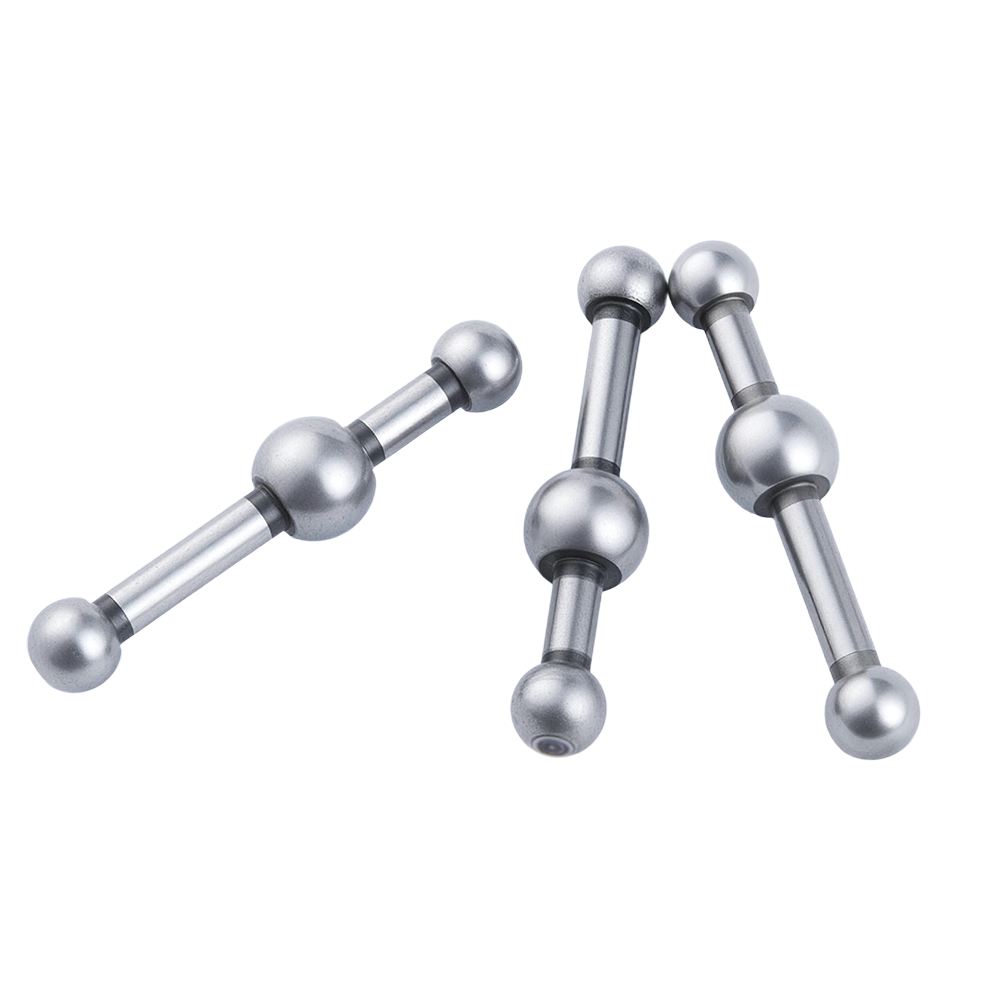 CNC Precision Machined Automotive PartsThese CNC-machined automotive parts, such as locating pins, adjustment bolts, valve spools, and spline shafts, maintain the tight bore and journal tolerances that keep damping, shaft runout, and sensor signals stable under vibration and million-cycle duty.View Product →
Liquid cooling systems
Cooling loops succeed or leak by sealing. Fluid connectors, tube fittings, and nozzle assemblies need smooth seal faces, accurate threads, and consistent flow geometry so that every unit shipped delivers the same thermal performance at working pressure.
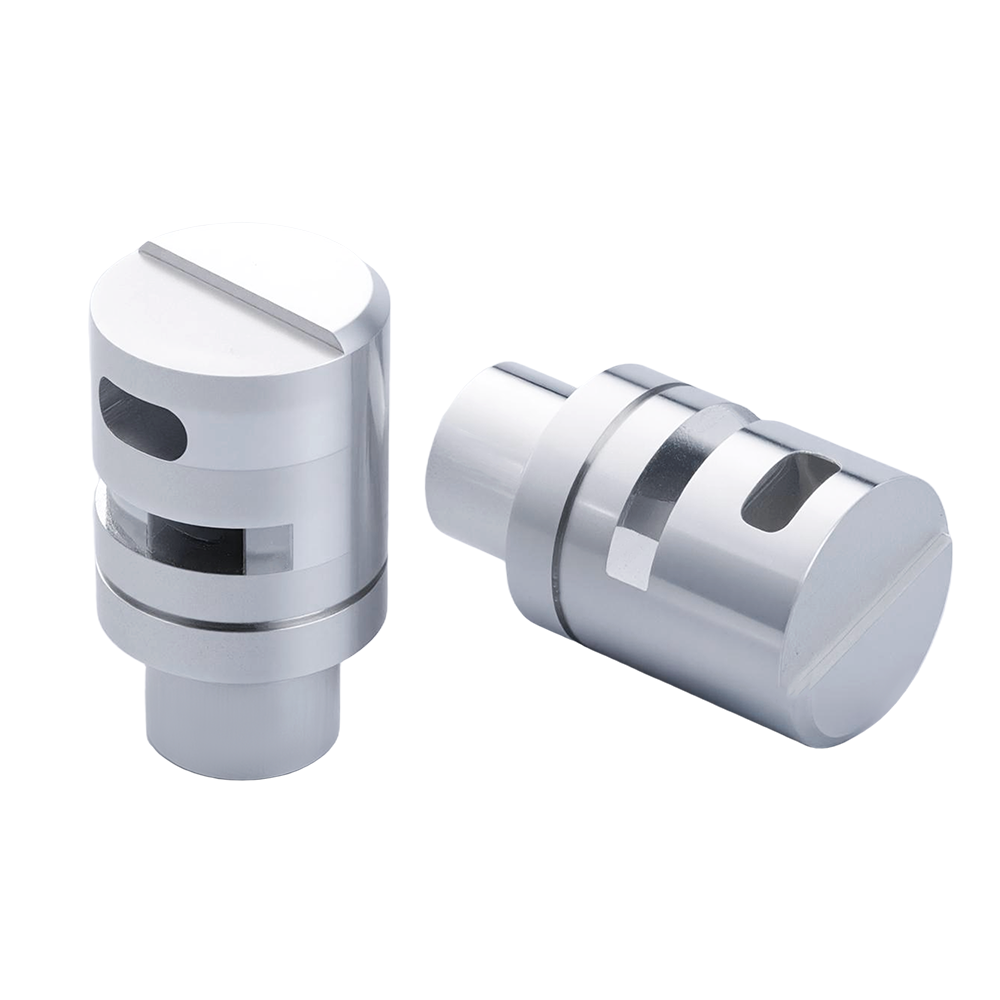 CNC Precision Machined Liquid Cooling PartsThis range of liquid cooling components covers valve cores, nozzles, valve sleeves, and fluid connectors machined with smooth seal faces and accurate threads, helping cooling loops hold consistent thermal performance and remain leak-free at working pressure.View Product →
Power tools
Drive components inside power tools absorb impact loads and heat every time the trigger is pulled. Gear shafts and transmission parts that drift out of tolerance turn directly into noise, shortened service life, and warranty claims.
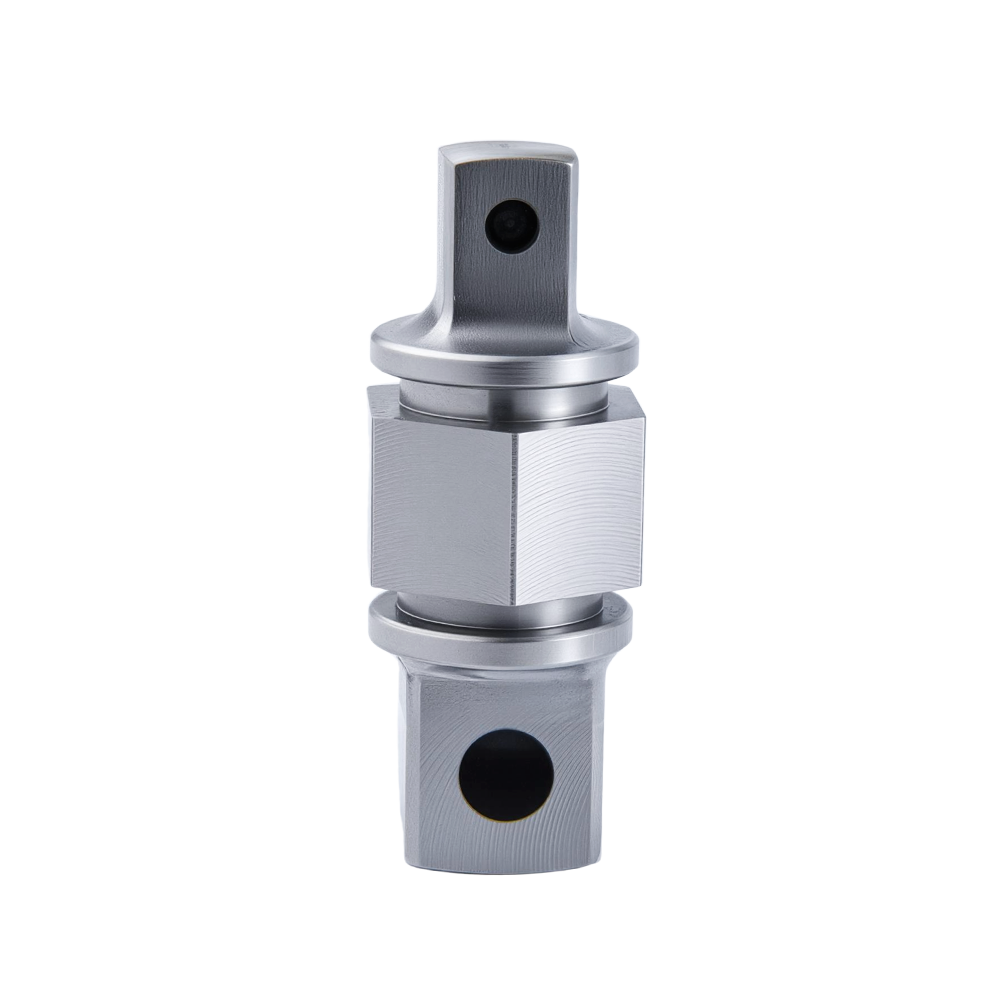 CNC Precision Machined Power Tool PartsMachined transmission components, planetary gear shafts, small module gears, and motor shafts built to absorb impact loads and heat inside power tools, where out-of-tolerance drive parts quickly become noise, shortened service life, and warranty claims.View Product →
Optical instruments and general machinery
Optical work sits at the finest end of the range: machined shims with thickness steps measured in microns, and instrument components where a few hundredths of a millimeter change alignment. Around them sit the general machinery parts many plants take for granted — bearing rings, locating pins, timing pulleys, knobs — all of which depend on batch consistency so downstream assembly runs without sorting and rework.
How to Evaluate a Precision Machining Supplier Before You Commit
Quotations tell you what a supplier promises; the process behind the quotation tells you what they can deliver. Four checks cut through the sales language:
- Match equipment to geometry. Small-diameter and slender parts require Swiss-type turning; parts with milled features need machining centers; bearing seats and spool fits need grinding. A supplier who outsources the finishing step controls neither the tolerance nor the delivery date.
- Ask how the part will be measured. Imported metrology equipment matters less than whether the supplier issues first-article and batch inspection reports against the critical dimensions on your drawing.
- Confirm the process chain sits under one roof — turning, milling, grinding, and cleaning — because every handoff adds tolerance risk and lead time.
- Discuss volume honestly. Process choices that suit a prototype rarely suit a 50,000-piece run, and a capable OEM machining partner will suggest drawing refinements that cut cost without touching function.
Experience shows in exactly these conversations. Xierge Precision Machinery, based in Yuyao, Zhejiang, has manufactured precision and general hardware components since 1990, running Star Swiss-type CNC lathes, machining centers, and grinding equipment, with inspection instruments imported from Japan and Germany. That equipment profile was built around the part families described above and serves automotive, liquid cooling, power tool, optical, home appliance, and general machinery customers in domestic and export markets.
The practical takeaway: define the critical dimensions on your drawing, match them to a realistic process chain, and choose a partner who can measure, hold, and repeat those dimensions at volume. Send the drawing with your tightest tolerances highlighted; a competent machining supplier will come back with a manufacturability opinion, a proposed process route, and a quotation grounded in reality rather than optimism. That early conversation remains an inexpensive form of quality control.
-
CNC Precision Machined Automotive Parts: Materials, Tolerances, and How to Choose the Right Manufacturer
CNC precision machined automotive parts are components produced by computer-controlled subtractive manufacturing processes — turning, milling, drilling, grinding, and multi-axis machining — to dimensi...
-
How Does CNC Precision Machining Improve Coolant Flow Efficiency in Liquid Cooling Systems?
As artificial intelligence workloads push server rack density and per-chip power dissipation to levels traditional air cooling cannot manage, CNC precision machined liquid cooling parts have become a...
-
How Do High-Precision CNC Machined Liquid Cooling Parts Solve the Critical Thermal Challenges of Scaling AI Computing Power?
The rapid expansion of artificial intelligence workloads has placed unprecedented thermal demands on computing hardware, driving a corresponding evolution in the precision engineering required to man...
-
CNC Precision Machined Automotive Parts: Materials, Tolerances & Applications
Every confident start on a winter morning, every quiet stretch of highway, every smooth brake application depends on hundreds of small metal parts doing their jobs without complaint. That is the worl...
-
CNC Precision Machined Liquid Cooling Parts: Tolerances, Materials, Sealing
A water block can pass every dimensional report and still drip on the test bench, because its O-ring groove came off the machine a few hundredths of a millimeter oversize. Situations like this are wh...
-
Why Does CNC Precision Machining Matter for Automotive Parts?
What CNC Precision Machining Brings to Automotive Parts CNC precision machining matters for automotive parts because it removes material from a solid workpiece according to a programmed digital path,...

- Products
- CNC Precision Machined Automotive Parts
- CNC Precision Machined Liquid Cooling Parts
- CNC Precision Machined Power Tool Parts
- CNC Precision Machined Optical Components
- Customize
- Swiss Turning
- Machining Center
- CNC Milling&Turning
- Centerless Grinding Machine
- Cylindrical Grinding Machine
- Contact
-
-
TEL: +86-0574-62480516

-
E-mail: [email protected]

-
Phone: +86-13175199595

-
Address: Address: No. 6 Shiji 1st Road, Mazhu Doumen Development Zone, Yuyao City, Zhejiang Province, China

-

