


 English
  中文简体
中文简体 
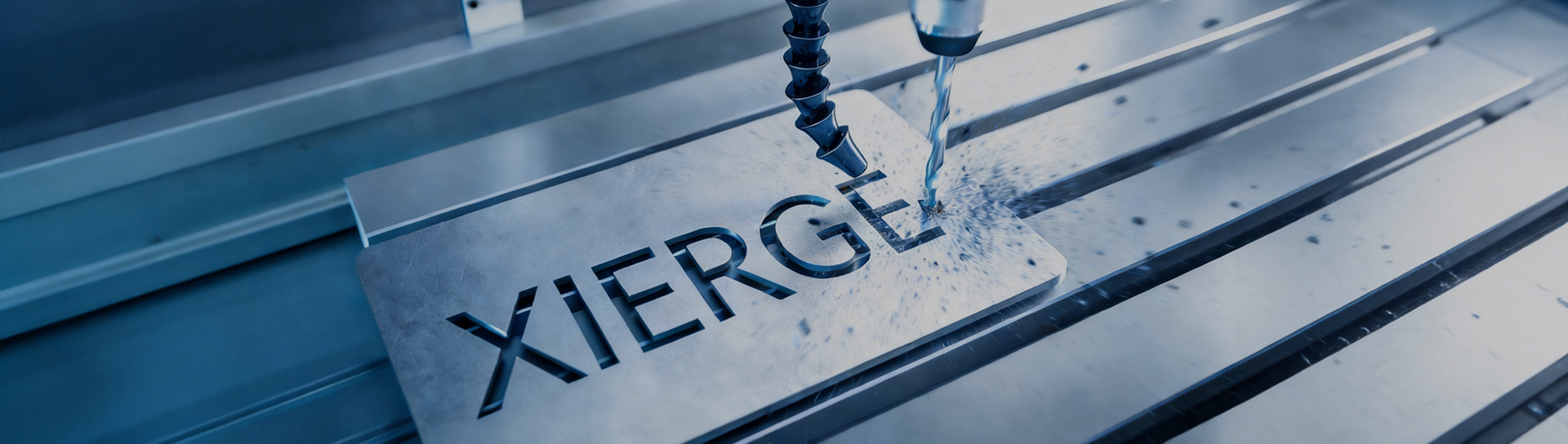
Why Does CNC Precision Machining Matter for Automotive Parts?
Content
- 1 What CNC Precision Machining Brings to Automotive Parts
- 2 How the Machining Process Works Step by Step
- 3 The Range of Precision Components Produced Through This Method
- 4 Materials Commonly Selected for Machined Automotive Components
- 5 Tolerances and Why Small Numbers Carry Large Consequences
- 6 Quality Systems That Govern Automotive Parts Production
- 7 Where Machined Parts Appear Across the Vehicle
- 8 Balancing Production Volume With Machining Method
What CNC Precision Machining Brings to Automotive Parts
CNC precision machining matters for automotive parts because it removes material from a solid workpiece according to a programmed digital path, allowing dimensions to be repeated within very tight tolerances across thousands of identical pieces. This repeatability is what keeps parts such as gears, shafts, and housings interchangeable from one production batch to another, which matters when a component needs to fit into an assembly line without manual adjustment. Unlike casting or stamping, where a mold shapes the rough form of a part, cutting-based machining works directly from digital drawings, so design changes can be applied to the program rather than requiring a new mold to be built.
The automotive sector relies on this method for parts that carry mechanical load or need to seal against fluid or air, since even a small deviation in diameter or surface finish can affect how a bearing seats or how a gasket compresses. Components produced this way often serve in engine systems, transmission assemblies, braking systems, and steering components, where dimensional accuracy directly influences how smoothly the vehicle operates.
How the Machining Process Works Step by Step
The process begins with a digital design file, typically created in CAD software, which is converted into machine instructions through CAM software. These instructions tell a cutting tool exactly where to move along multiple axes, how fast to rotate, and how deep to cut into the material. A rotating spindle holds either the tool or the workpiece, depending on whether the machine is a mill or a lathe, and removes material in successive passes until the final shape matches the digital model.
Multi-Axis Movement and Complex Geometry
Many automotive parts require curved surfaces, internal channels, or angled mounting points that a simple three-axis machine cannot reach in a single setup. Five-axis machining tilts and rotates the workpiece or tool along additional planes, allowing a single setup to cut features from multiple angles without repositioning the part. This reduces the accumulated error that can occur each time a part is unclamped and remounted, which is particularly relevant for parts like turbocharger housings or steering knuckles that combine curved and flat surfaces on the same piece.
The Range of Precision Components Produced Through This Method
Precision machining equipment used in the automotive parts sector is generally capable of producing a fairly wide variety of components rather than a single fixed shape. Shafts, valve sleeves, valve cores, and transmission components represent some of the more commonly machined parts, each requiring different combinations of turning, milling, and grinding operations depending on their geometry and function. A shaft, for instance, typically calls for cylindrical turning with close attention to roundness and straightness, while a valve sleeve or valve core often needs internal bore work where surface finish and dimensional consistency directly affect how fluid or air flows through the assembled valve mechanism.
Transmission components add another layer of complexity, since gear teeth, splines, and mating surfaces must align precisely with paired parts to transmit rotational force smoothly. Long-term collaboration between machining suppliers and vehicle component customers often develops around this kind of parts range, since consistent quality across shafts, valves, and drivetrain components over repeated production runs builds the kind of reliability that automotive supply chains depend on year after year.
Materials Commonly Selected for Machined Automotive Components
Material choice depends on where the part sits in the vehicle and what forces or temperatures it faces during operation. Aluminum alloys, particularly grades such as 6061 and 7075, are frequently machined for structural brackets and housings because they combine a relatively low weight with reasonable strength, which supports fuel efficiency goals without sacrificing durability. Steel alloys, including carbon steel and stainless variants, are chosen for parts under higher mechanical stress, such as gears, shafts, and fasteners, since steel offers greater tensile strength and wear resistance under repeated load cycles.
| Material | Key Property | Typical Parts |
|---|---|---|
| Aluminum 6061/7075 | Light weight, corrosion resistant | Housings, brackets, manifolds |
| Carbon steel | High strength, wear resistant | Gears, shafts, fasteners |
| Stainless steel | Corrosion resistant, durable | Valve sleeves, valve cores, fittings |
| Brass | Good machinability, conductivity | Electrical connectors, fittings |
Tolerances and Why Small Numbers Carry Large Consequences
Tolerance refers to the allowable variation in a part's dimensions, usually expressed in fractions of a millimeter. Automotive components frequently call for tolerances between ±0.01mm and ±0.05mm, particularly for parts that interface with bearings, seals, or mating surfaces where clearance directly affects performance. A shaft machined slightly oversized may bind against a bearing, generating excess heat and premature wear, while one machined undersized can introduce play that leads to vibration or misalignment over time.
Surface finish, often measured in microinches or micrometers of roughness, works alongside dimensional tolerance to determine how two machined surfaces interact. A smoother finish on a cylinder bore, for instance, reduces friction against a piston ring, which can influence both fuel consumption and long-term wear on the engine.
Quality Systems That Govern Automotive Parts Production
Beyond the machining process itself, automotive parts production is typically governed by a formal quality management framework, with IATF 16949 standing as the widely recognized standard across the automotive supply chain. This framework builds on general quality management principles but adds automotive-specific requirements around defect prevention, variation reduction, and traceability throughout the production process. Facilities operating under this standard generally maintain documented process controls, routine calibration of measuring equipment, and statistical monitoring of key dimensions across production runs, rather than relying on final inspection alone to catch deviations.
This kind of quality system matters particularly for parts that will be integrated into larger assemblies by other manufacturers, since a documented process history allows any dimensional issue to be traced back to a specific batch or machine setting rather than requiring guesswork after a part has already reached the field.
Where Machined Parts Appear Across the Vehicle
Machined components appear throughout a vehicle's mechanical systems rather than being limited to one area. Engine blocks and cylinder heads often begin as cast parts that are then machined to achieve final bore dimensions and mounting surfaces. Transmission components, including gear shafts and synchronizer hubs, depend on machining to achieve the tooth profiles and shaft diameters needed for smooth gear engagement. Braking systems use machined calipers and rotors where flatness and surface finish directly affect how evenly braking force is applied across the pad contact area. Steering and suspension parts, such as knuckles and control arm brackets, rely on machined mounting points to keep alignment angles consistent from vehicle to vehicle.
Balancing Production Volume With Machining Method
Not every automotive part is machined from a solid block of raw material for its entire shape. Many components start as forgings or castings, which roughly form the part's overall geometry, and are then finish-machined only where precise dimensions or smooth surfaces are required, such as bearing seats or mounting holes. This combination approach reduces the amount of material removed by cutting tools, which shortens cycle time and lowers tool wear compared to machining an entire part from a solid billet. Choosing between full machining and finish machining after forging or casting depends largely on part complexity and expected production volume, with high-volume parts often favoring the forging-plus-machining route, while low-volume or prototype parts may be machined entirely from billet stock for flexibility in design changes.
-
CNC Precision Machined Automotive Parts: Materials, Tolerances, and How to Choose the Right Manufacturer
CNC precision machined automotive parts are components produced by computer-controlled subtractive manufacturing processes — turning, milling, drilling, grinding, and multi-axis machining — to dimensi...
-
The Role of CNC Precision Machining in Manufacturing High-Performance Power Tool Parts
What Is CNC Precision Machining CNC precision machining is a computer-controlled manufacturing process that removes material from metal or plastic blanks using cutting tools to produce parts with ext...
-
CNC Precision Machined Automotive Parts: Materials, Tolerances & Applications
Every confident start on a winter morning, every quiet stretch of highway, every smooth brake application depends on hundreds of small metal parts doing their jobs without complaint. That is the worl...
-
Machinist Symbols Guide: Reading Blueprint Marks for Precision CNC Parts
Machinist symbols can look like a foreign language when you open a production drawing for the first time. After more than three decades of machining precision components, we can tell you that the mos...
-
CNC Precision Machined Power Tool Parts | Swiss-Type Turning & OEM Custom
When a power tool design moves from prototype to production, the parts that typically cause trouble are the small rotary and housing components: motor shafts, transmission shafts, spline shafts, valv...
-
CNC Turning and Precision Metal Parts Manufacturing
CNC Turning and Precision Metal Parts Manufacturing Precision CNC machining is an essential process for manufacturing metal components used in a wide range of industrial applications. From aluminum pa...

- Products
- CNC Precision Machined Automotive Parts
- CNC Precision Machined Liquid Cooling Parts
- CNC Precision Machined Power Tool Parts
- CNC Precision Machined Optical Components
- Customize
- Swiss Turning
- Machining Center
- CNC Milling&Turning
- Centerless Grinding Machine
- Cylindrical Grinding Machine
- Contact
-
-
TEL: +86-0574-62480516

-
E-mail: [email protected]

-
Phone: +86-13175199595

-
Address: Address: No. 6 Shiji 1st Road, Mazhu Doumen Development Zone, Yuyao City, Zhejiang Province, China

-

