


 English
 中文简体

CNC Precision Machined Automotive Parts: Materials, Tolerances & Applications
Content
- 1 What Counts as a CNC Precision Machined Automotive Part?
- 2 Why Precision Matters So Much in Automotive Applications
- 3 Materials That Earn Their Place Under the Chassis
- 4 The Processes Behind a Reliable Finished Part
- 5 Quality Control From First Article to Final Shipment
- 6 Bringing Your Automotive Component Into Production
Every confident start on a winter morning, every quiet stretch of highway, every smooth brake application depends on hundreds of small metal parts doing their jobs without complaint. That is the world we have worked in at Xierge Precision Machinery for more than three decades—turning customer drawings into the tight-tolerance components that automotive assemblies rely on, batch after batch. In this article, we would like to share what CNC precision machined automotive parts actually involve: the part families we see most often, the materials that earn their place, the processes behind a reliable finish, and what we believe you should expect from a machining partner.
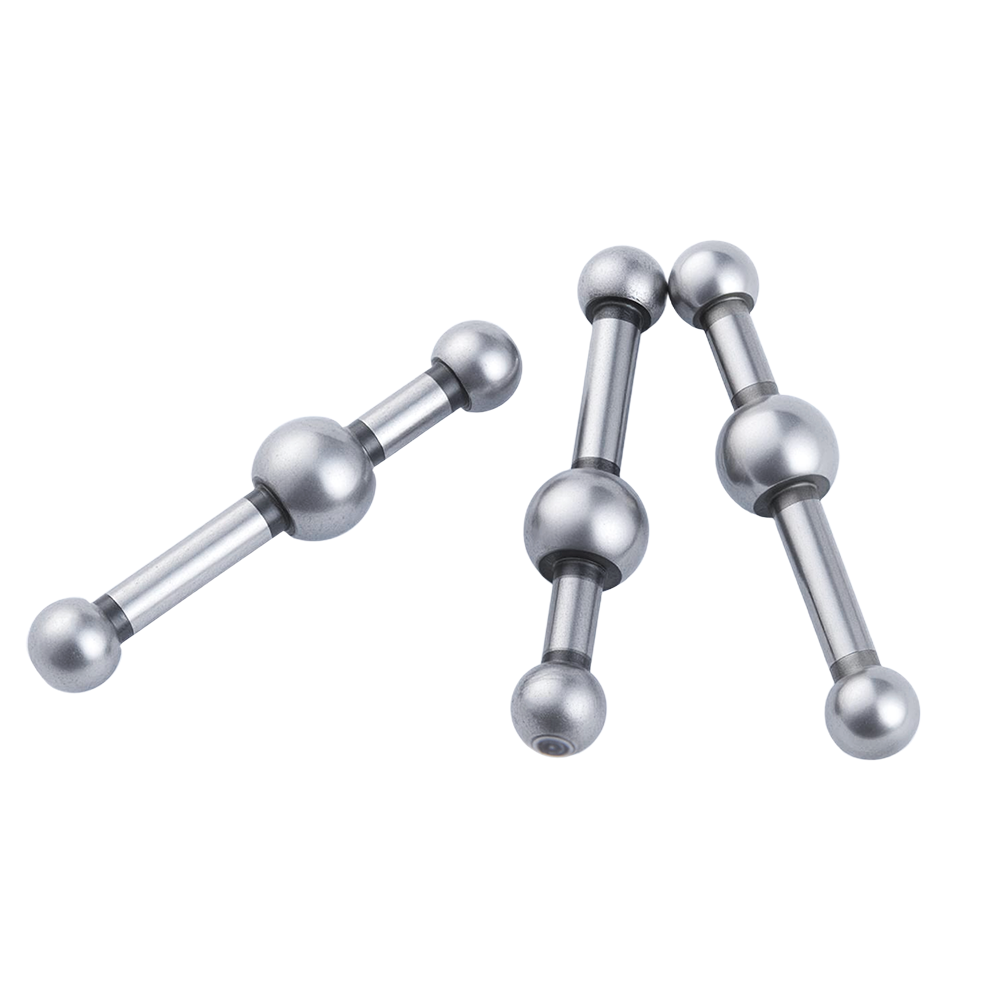 CNC Automotive Precision Machined Locating PinMade from 20CrMo with carburizing and vibratory finish, this locating pin exemplifies the tight-tolerance rotating and connecting automotive components discussed, ensuring accurate positioning inside larger assemblies batch after batch.View Product →
What Counts as a CNC Precision Machined Automotive Part?
When people picture automotive manufacturing, they usually imagine stamped body panels or cast engine blocks. The components we machine are smaller and less visible, but no less critical. They are the rotating, sealing, sensing, and connecting parts buried inside larger assemblies, where a deviation of a few microns can decide whether a system runs smoothly or wears out early. Across our automotive orders, a few part families come up again and again:
- Shafts and transmission components—motor shafts, drive shafts, spline shafts, planetary gear shafts, and high-speed shafts that carry torque and rotation through the vehicle.
- Sleeves and housings—automotive shock absorber sleeves, solenoid valve sleeves, valve sleeves, and base housing components that guide, seal, and protect moving parts.
- Sensor and electrical components—electromagnetic sensor parts and magnetic yokes used in position sensing and electronic control modules.
- Fluid system components—valve stems, spools, precision nozzles, and fittings that manage fuel, coolant, and other media.
- Fastening and locating elements—precision bolts, locating pins, and bearing rings that keep assemblies aligned and secure.
Why these parts reward specialization
Many of these components share an awkward geometry: they are long and slender, thin-walled, or combine a precision bore with fine external features. A slender shock absorber sleeve or a delicate sensor pin will deflect, chatter, or distort if it is clamped the wrong way. This is exactly where Swiss-type CNC turning, which supports the material immediately behind the cutting zone, proves its worth—and why we have invested in imported Star Swiss-type lathes specifically for this kind of work.
Why Precision Matters So Much in Automotive Applications
In many industries, a slightly out-of-spec part is an inconvenience. In automotive applications, it tends to become a warranty claim, a line stoppage, or a safety discussion. A shock absorber sleeve that is even marginally out of round will telegraph its imperfection straight to the driver's hands through the steering. A valve spool with a rough surface finish will stick under pressure. An electromagnetic sensor component with inconsistent geometry can send noisy signals to a control unit that was calibrated expecting a clean input.
That is why automotive buyers generally judge a machining supplier on three things at once: absolute accuracy, yes, but also repeatability across tens of thousands of pieces and traceable consistency from the first shipment to the last. Anyone can occasionally produce a beautiful sample; the real test is whether piece number 50,000 measures the same as piece number one. This mindset shapes how we quote, how we fixture, and how we inspect every automotive part that leaves our floor.
Materials That Earn Their Place Under the Chassis
Material selection is one of the first conversations we have with a new automotive customer, because it drives cost, machinability, corrosion behavior, and fatigue life all at once. Stainless steel, brass, aluminum, and various steels each have a natural home in vehicle systems. The table below summarizes how we typically see them applied.
| Material | Typical Automotive Uses | Key Strengths |
|---|---|---|
| Stainless steel | Sensor housings, valve sleeves, fluid fittings | Corrosion resistance, strength, stable finishes |
| Brass | Valve components, fittings, electrical contact parts | Excellent machinability, conductivity, sealing |
| Aluminum alloys | Housings, covers, lightweight structural parts | Low weight, thermal conductivity, easy finishing |
| Carbon and alloy steels | Shafts, pins, gear components, wear parts | High strength, fatigue resistance, hardenability |
If you are weighing options for a new part, our article on materials and tolerances for CNC precision machined automotive parts goes into more depth on matching material behavior to production demands.
The Processes Behind a Reliable Finished Part
A precision automotive component rarely comes off a single machine. In our experience, a dependable part is the product of a deliberately sequenced process chain:
- Drawing review and manufacturability feedback, where our engineers confirm tolerances, datums, and features before a single bar of material is cut.
- Precision turning, including Swiss-type machining for small-diameter and slender parts, and conventional CNC turning for larger rotational work.
- Milling and machining-center operations for cross holes, flats, slots, and other features that turning alone cannot reach.
- Grinding—centerless and cylindrical—when final dimensions and surface finish demands exceed what cutting tools can hold economically.
- Cleaning, inspection, and protective packaging, so the part arrives ready for the customer's assembly line rather than needing rework.
Our workshop pairs imported Star Swiss-type CNC lathes with CNC turning centers, machining centers, cylindrical and centerless grinding machines, and dedicated cleaning equipment. Keeping turning, milling, and grinding under one roof shortens the feedback loop: when a tolerance question arises mid-run, the person who can adjust the process is usually standing next to the machine.
Quality Control From First Article to Final Shipment
Automotive customers rarely take a supplier's word on quality; they verify it. We approach every new part with first article inspection, so both sides agree on what "good" looks like before volume production begins. During the run, in-process checks catch drift early, and every batch passes a final inspection before packing.
Our measuring instruments are imported from Japan and Germany, which matters more than it might sound. When a customer questions a dimension, the readings have to stand up to scrutiny—ours and theirs. Combined with controlled material sourcing and documented inspection records, this gives our automotive buyers something concrete to audit, not just a promise on a webpage.
Bringing Your Automotive Component Into Production
Most of our automotive work is OEM customization: a customer brings drawings, a specification, or sometimes just a sample and a problem statement. If you are considering a machining partner for a new part—or an existing part that keeps giving you trouble—a few things make the first conversation productive:
- Your 2D drawings or 3D models, with critical tolerances and datums clearly marked.
- Target annual or batch volumes, so we can propose a process that is economical at your scale.
- Material requirements or performance constraints, such as corrosion resistance or hardness targets.
- Any special expectations for packaging, marking, or delivery scheduling.
We welcome domestic and international customers to visit our factory in Yuyao, Zhejiang. Seeing the machines, the inspection room, and the warehouse in person remains the fastest way to build the confidence that a drawing alone cannot provide. Whether you need a proven part family reproduced at scale or a difficult new component machined for the first time, we are glad to put three decades of experience behind your project.
Precision machined automotive parts sit at the intersection of engineering ambition and manufacturing discipline. The designs come from our customers; the discipline is what we bring to the shop floor every day. If you have a part in mind, send us the drawing and let's talk it through together.
-
CNC Precision Machined Automotive Parts: Materials, Tolerances, and How to Choose the Right Manufacturer
CNC precision machined automotive parts are components produced by computer-controlled subtractive manufacturing processes — turning, milling, drilling, grinding, and multi-axis machining — to dimensi...
-
CNC Precision Machined Liquid Cooling Parts: Tolerances, Materials, Sealing
A water block can pass every dimensional report and still drip on the test bench, because its O-ring groove came off the machine a few hundredths of a millimeter oversize. Situations like this are wh...
-
How Do You Choose Precision CNC Machining Parts Based on Tolerances, Materials, and Supplier Capabilities?
A precision CNC machining part earns its name on the production floor, not in a brochure. The test is simple to state and hard to pass: does the part hold its specified dimension — often within ±0.01...
-
Aluminum Swiss Screw Machined Parts: Precision, Tolerances, and Turnkey CNC Services
When a component must be small, precise, and produced in volume, aluminum Swiss screw machined parts are often the best answer. The Swiss-type lathe was developed for a challenge that ordinary turnin...
-
CNC Precision Machined Power Tool Parts | Swiss-Type Turning & OEM Custom
When a power tool design moves from prototype to production, the parts that typically cause trouble are the small rotary and housing components: motor shafts, transmission shafts, spline shafts, valv...
-
Steel Turned Parts: CNC Turning Materials, Tolerances and How to Source
Steel turned parts rarely get noticed. They sit inside a shock absorber, a liquid-cooling manifold, a power tool gearbox, or an optical instrument, quietly holding a shaft on centre, seating a valve,...

- Products
- CNC Precision Machined Automotive Parts
- CNC Precision Machined Liquid Cooling Parts
- CNC Precision Machined Power Tool Parts
- CNC Precision Machined Optical Components
- Customize
- Swiss Turning
- Machining Center
- CNC Milling&Turning
- Centerless Grinding Machine
- Cylindrical Grinding Machine
- Contact
-
-
TEL: +86-0574-62480516

-
E-mail: [email protected]

-
Phone: +86-13175199595

-
Address: Address: No. 6 Shiji 1st Road, Mazhu Doumen Development Zone, Yuyao City, Zhejiang Province, China

-

