


 English
  中文简体
中文简体 
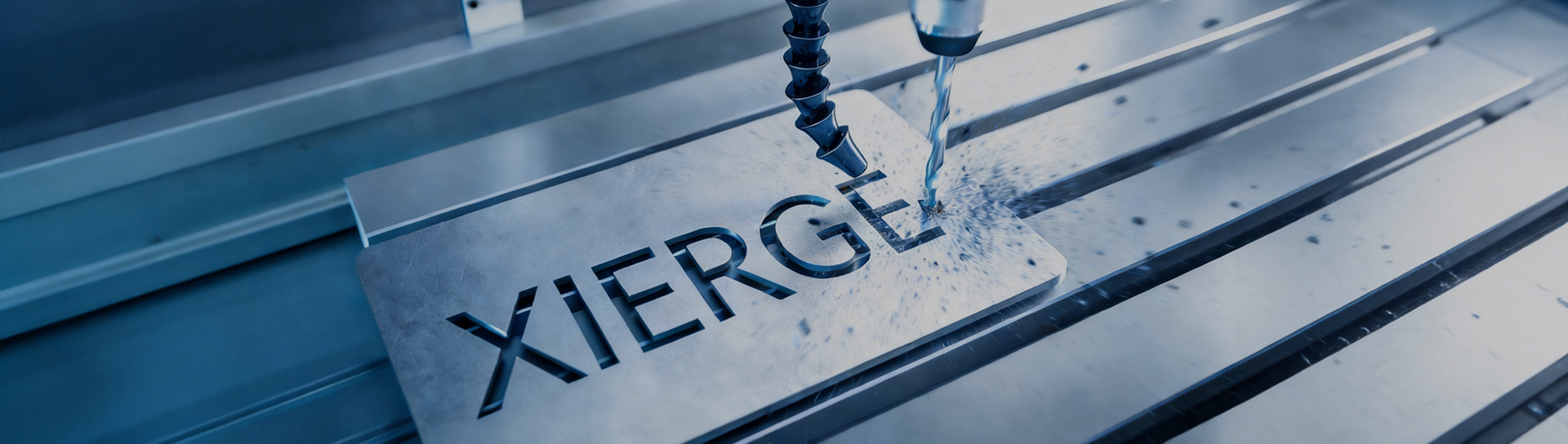
CNC Precision Machined Liquid Cooling Parts: Tolerances, Materials, Sealing
Content
A water block can pass every dimensional report and still drip on the test bench, because its O-ring groove came off the machine a few hundredths of a millimeter oversize. Situations like this are why liquid cooling hardware is unforgiving to machine: coolant circulates within millimeters of heat sources, and small geometry errors turn into leaks, hot spots, or pressure drops that only appear after assembly. Our conclusion up front: when you buy CNC precision machined liquid cooling parts, long-term reliability is decided by three things — the geometry of the flow path, the condition of the sealing surfaces, and consistency from batch to batch. Everything else is detail around those three.
This article walks through the parts in a cooling loop that get machined, why CNC machining remains the default process, how material choices and tolerances interact, and what we would verify before releasing a purchase order — written from the standpoint of a machining shop that cuts these parts every day.
Which Liquid Cooling Parts Are CNC Machined?
A liquid cooling loop uses fewer component types than most mechanical assemblies, but each one carries either a thermal duty or a sealing duty, and most of them start as solid billet. The parts most commonly produced on CNC equipment include:
- Cold plates and water blocks — collect heat from CPUs, GPUs, power modules, battery cells, and lasers
- Manifolds — distribute coolant evenly across multiple plates in a rack or vehicle pack
- Fluid connectors and tube fittings — carry the loop and seal it at every joint
- Nozzles and jet components — direct coolant at targeted hot zones
- Housings, covers, and sensor pockets — close the assembly and hold instrumentation
In our own production, this range covers CNC liquid cooling system components along with nozzle assemblies and turned fittings, produced to customer drawings for OEM equipment builders.
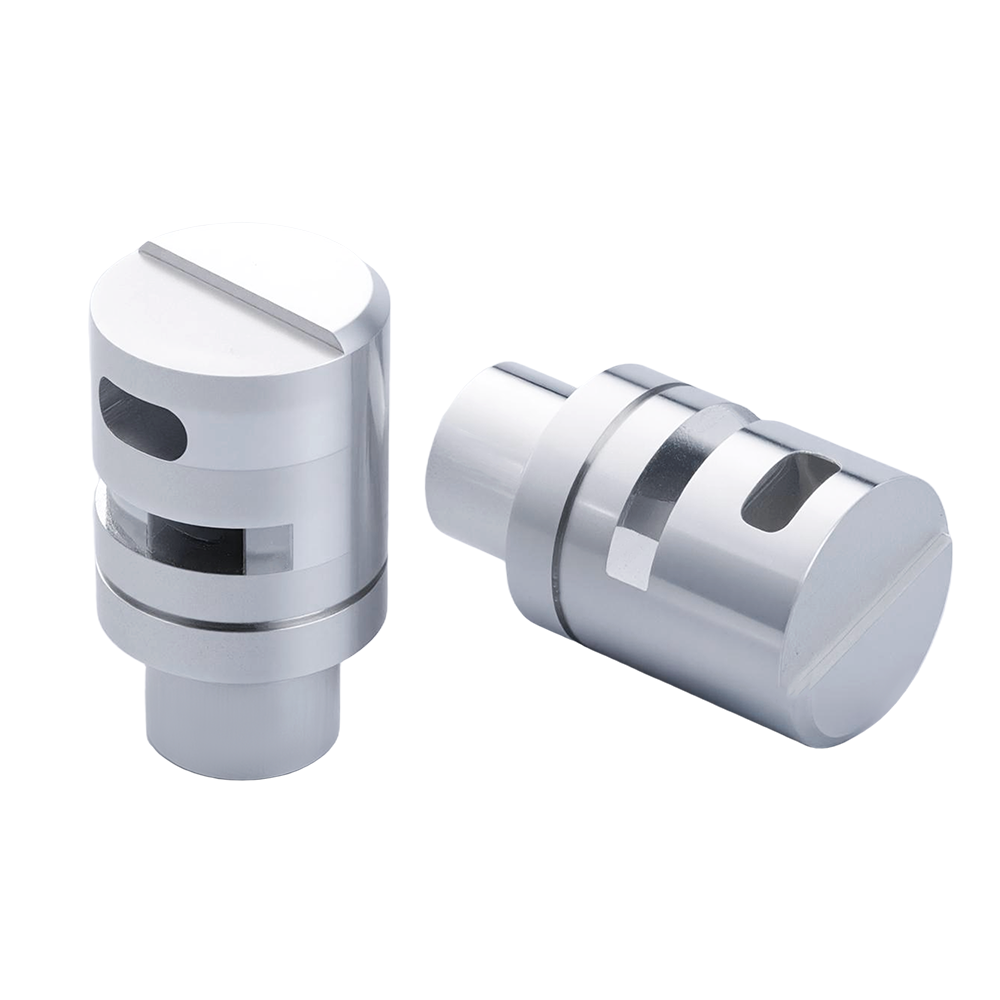 CNC Machined Liquid Cooling ComponentsMachined from solid billet with seamless flow paths, finished sealing faces, and geometry changed by program edits. Suitable for OEM builders needing liquid cooling parts, nozzles, and turned fittings made to customer drawings.View Product →
Why CNC Machining Is the Default Process
Cast channels risk porosity. Extrusions lock in one channel shape. Additive parts still need every sealing face machined afterward. Cutting a cooling component from solid billet avoids all three compromises: the flow path carries no seams, geometry changes become program edits rather than new dies, and every face that must seal is finished under controlled conditions. Three component families show this best.
Cold Plates and Water Blocks
The thermal core of any loop is a network of milled pockets: channels held to consistent depth, microchannel fins thin enough to add surface area without starving flow, and a cover interface flat enough to seal under load. Depth uniformity matters more than buyers expect — a channel 0.1 mm shallower in one corner quietly changes local flow velocity and leaves a warm zone that no airflow will fix. Inlet and outlet ports are thread-milled or tapped in the same setup, keeping port axes square to the sealing face.
Sealing Surfaces and O-Ring Grooves
Most field failures in liquid cooling trace back to a sealing feature, not a channel. A mating face needs flatness — commonly around 0.05 mm on precision plates — plus a finish near Ra 1.6 μm so the gasket can conform. The O-ring groove must hold its gland dimensions, because an oversize groove lets the ring wander while an undersize one squeezes it past its elastic limit. Burrs and chips are a failure mode of their own: a particle released during machining can log in a microchannel or seat under a seal.
Connectors, Nozzles, and Other Small Turned Parts
Fittings, quick-disconnect bodies, and nozzle tips are the Swiss turning problem set — small diameters, slender bodies, threads, seal grooves, and cross-holes in brass, aluminum, or stainless steel. On a Swiss-type CNC lathe, the guide bushing supports the stock right at the cutting zone, so a long, thin fitting is turned complete — outer diameter, threads, grooves, and bore — without deflection or a second setup. Single-setup completion is what keeps thread-to-seal concentricity tight enough for a leak-free joint.
Material Selection: Copper, Aluminum, Stainless, and Brass
Thermal conductivity pulls designers toward copper; weight, cost, and machinability pull toward aluminum; coolant chemistry decides how much corrosion resistance the loop truly needs. We machine all four common families and help customers match them to the working fluid. Aluminum is normally anodized to resist corrosion; copper is frequently plated or nickel-coated in aggressive chemistries; and mixed-metal loops need a galvanic check so one metal does not sacrifice itself to another.
| Material | Thermal Conductivity (W/m·K) | Corrosion Behavior | Common Role in the Loop |
|---|---|---|---|
| Copper C11000 | 390 | Moderate; usually coated | Water blocks, high-heat-flux cold plates |
| Aluminum 6061 | 170 | Good when anodized | Cold plate bodies, manifolds, housings |
| Stainless steel 316 | 16 | Excellent | Fittings, connector bodies, structural ports |
| Brass C36000 | 120 | Good | Small fittings, nozzles, seats and sleeves |
One practical request we encourage: demand material traceability on every wetted part. Coolant formulations vary widely, and a fitting that shrugs off plain water can pit badly in an inhibited glycol mix.
Tolerances and Finishes Worth Specifying
Tight everywhere means expensive everywhere. The efficient approach tightens only the features that touch coolant or a seal and leaves the rest at standard machining tolerance. On drawings we review, these callouts decide performance:
- Mating face flatness — around 0.05 mm for precision cold plates; tighter values are achievable but raise cost quickly
- O-ring groove width and depth — held to the gland specification, with groove finish at Ra 1.6 μm or better
- Channel depth and width — typically ±0.05 to ±0.1 mm, matched across every pocket in multi-plate systems
- Port threads — NPT, G, and UNF each behave differently with tape, sealant, and face seals, so the thread standard should match the hoses and couplings the loop already uses
- Cleanliness — burr removal and particle limits, verified before assembly rather than assumed
None of these values is exotic for a well-maintained shop, but they must be inspected rather than promised — which is why we recommend asking for measurement data with each batch, not just a certificate.
From Prototype to Volume Production
A part that machines beautifully as a prototype can still stumble at volume if the design ignores tool access or the joining process. The most efficient projects bring the machining partner in at the drawing stage, while a corner radius can still be matched to a standard end mill or a wall thickened for brazing at no extra cost. From there, a disciplined ramp looks like this:
- Drawing review with manufacturability feedback on channels, ports, and seal features
- First article machining with a full dimensional report
- Leak and pressure testing on the sample at the pressure and hold time the application requires
- Pilot batch to confirm repeatability across setups and operators
- Volume production with in-process checks and documented inspection per lot
The joining method deserves early attention as well. Two-piece cold plates are either brazed or friction stir welded, which demands precisely machined mating surfaces, or closed with a gasketed cover, which shifts the critical features to the O-ring groove. The choice changes what gets machined tight, so it belongs in the first conversation rather than the last.
What to Look for in a Machining Partner
Reduce the decision to two questions: does the shop own the processes this part family needs under one roof, and can it measure what it produces? Xierge Precision Machinery has operated since 1990 as a precision machining supplier, and the equipment list was built around this kind of work: Star-brand Swiss-type CNC lathes imported from Japan, CNC lathes and machining centers for milled features, grinding machines for flat and cylindrical finishing, and cleaning equipment for parts headed into a coolant loop. Metrology instruments are imported from Japan and Germany, so inspection reports come from calibrated equipment rather than estimates.
Capability matters as much as hardware. We turn brass, aluminum, and stainless parts daily, maintain Swiss turning, machining center, milling and turning, centerless grinding, and cylindrical grinding as defined service lines, and accept OEM work directly from customer drawings — including the slender fittings and nozzles described above. Customers in automotive, liquid cooling, power tool, and optical equipment manufacturing bring the designs; we handle process planning, inspection, and batch delivery. Factory visits are welcome before any order is placed.
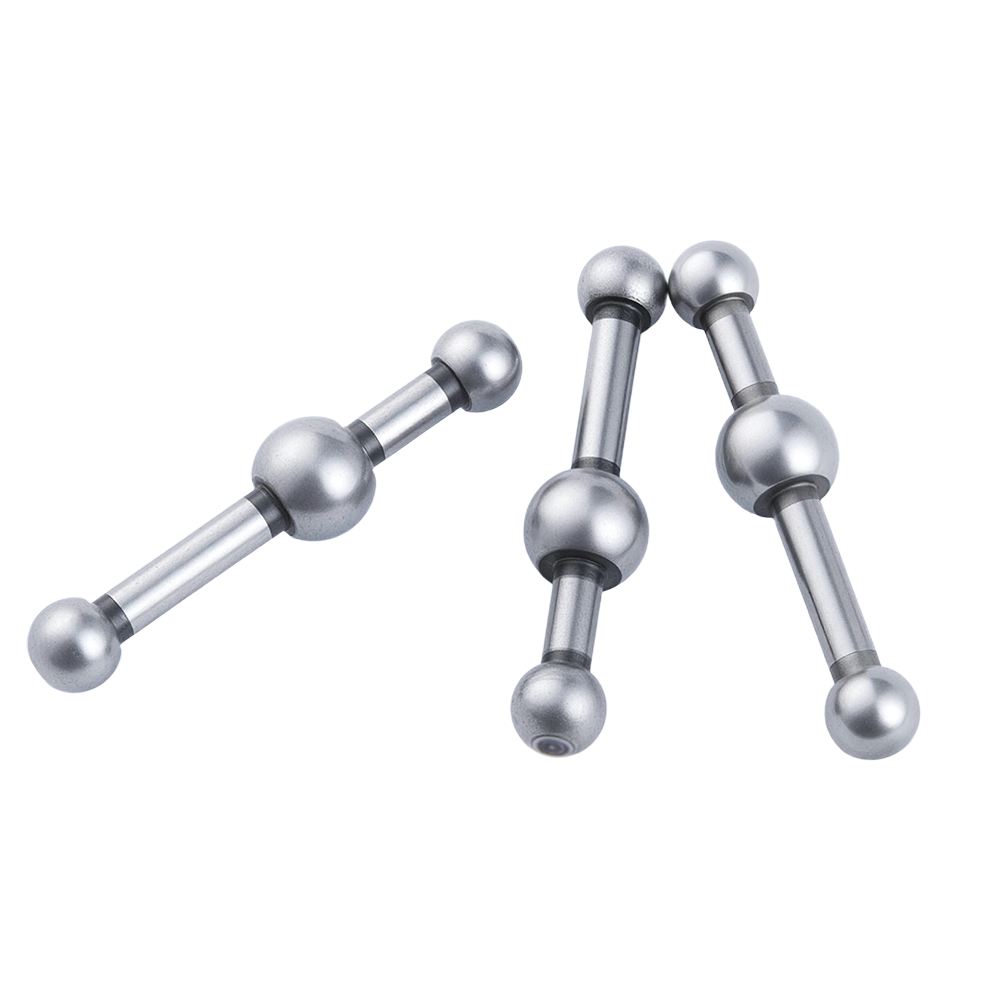 Swiss-Type Precision Machined ComponentsDaily production in brass, aluminum, and stainless with Swiss turning, grinding, and machining centers. The OEM drawing-based process suits slender liquid cooling fittings and nozzles requiring tight tolerances and consistent batch delivery.View Product →
The Bottom Line for Buyers
Liquid cooling rewards buyers who define the sealing geometry, materials, and acceptance tests before the first chip is cut, and it punishes assumptions everywhere else. A capable CNC partner should flag the groove that will not hold its gland, the port placed too close to a wall for a standard tool, and the channel radius that doubles cycle time — before quoting, not after a failed leak test. If you have drawings or a sample in hand, send them along with your working pressure, flow rate, and coolant type, and we will return a manufacturability review and a practical quotation.
-
CNC Precision Machined Automotive Parts: Materials, Tolerances & Applications
Every confident start on a winter morning, every quiet stretch of highway, every smooth brake application depends on hundreds of small metal parts doing their jobs without complaint. That is the worl...
-
CNC Precision Machined Automotive Parts: Materials, Tolerances, and How to Choose the Right Manufacturer
CNC precision machined automotive parts are components produced by computer-controlled subtractive manufacturing processes — turning, milling, drilling, grinding, and multi-axis machining — to dimensi...
-
How Do High-Precision CNC Machined Liquid Cooling Parts Solve the Critical Thermal Challenges of Scaling AI Computing Power?
The rapid expansion of artificial intelligence workloads has placed unprecedented thermal demands on computing hardware, driving a corresponding evolution in the precision engineering required to man...
-
CNC Precision Machined Power Tool Parts | Swiss-Type Turning & OEM Custom
When a power tool design moves from prototype to production, the parts that typically cause trouble are the small rotary and housing components: motor shafts, transmission shafts, spline shafts, valv...
-
Aluminum Swiss Screw Machined Parts: Precision, Tolerances, and Turnkey CNC Services
When a component must be small, precise, and produced in volume, aluminum Swiss screw machined parts are often the best answer. The Swiss-type lathe was developed for a challenge that ordinary turnin...
-
Why Are High-Precision CNC Machined Liquid Cooling Components the Essential Key to Unleashing Massive AI Computing Power?
The rapid growth of artificial intelligence workloads has placed unprecedented demands on data center infrastructure, particularly in the area of thermal management. As processors dedicated to traini...

- Products
- CNC Precision Machined Automotive Parts
- CNC Precision Machined Liquid Cooling Parts
- CNC Precision Machined Power Tool Parts
- CNC Precision Machined Optical Components
- Customize
- Swiss Turning
- Machining Center
- CNC Milling&Turning
- Centerless Grinding Machine
- Cylindrical Grinding Machine
- Contact
-
-
TEL: +86-0574-62480516

-
E-mail: [email protected]

-
Phone: +86-13175199595

-
Address: Address: No. 6 Shiji 1st Road, Mazhu Doumen Development Zone, Yuyao City, Zhejiang Province, China

-

